
If you have ever noticed a thin strip of grey metal wrapped around your chimney, sealed along the edge of a skylight, or tucked where your roof meets a wall, that is lead flashing. It is one of the most important yet most overlooked parts of any roof. Most homeowners never think about it, and that is fine until it fails. When lead flashing fails, water seeps in, and even a slow drip can lead to costly damage. Damp ceilings, damaged timbers, mould, and structural issues can all trace back to a small strip of lead that was cracked, lifting, or simply worn out.
In this guide, RBG Roofing Ltd explain exactly what lead flashing is, why it matters so much, and what is involved in properly installing, maintaining, or replacing it.
What Is Lead Flashing?
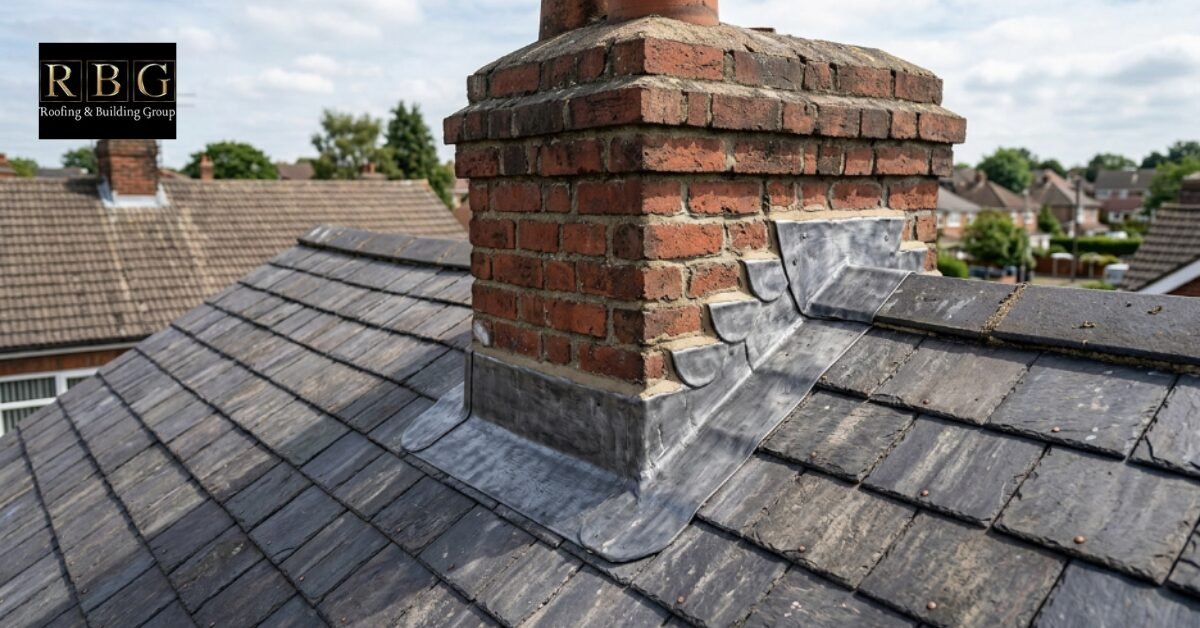
Lead flashing is a thin sheet of lead fitted around the joints and edges of a roof to create a watertight seal. Wherever two surfaces meet on a roof, such as where a chimney passes through the tiles or where a roof slope runs up against a wall, there is a gap. Without something to seal that gap, rainwater will eventually find its way in. Lead flashing sits over those vulnerable points and directs water safely away from the joints, stopping it from entering the roof structure below. It is one of the oldest roofing materials still in use today because it works. Lead is soft enough to be shaped around awkward angles, tough enough to handle decades of British weather, and durable enough to outlast most other parts of the roof it protects.
The word is thought to come from the Old English term “flasche,” which described a metal plate used to seal joints in buildings. Over time, it became the standard roofing term we use today. The name stuck, and so did the material.
Importance of Lead Flashing
Lead flashing is not just a finishing detail; it is one of the most important waterproofing elements on your entire roof. Here is why it matters so much:
- It protects the most vulnerable parts of your roof. The joints and edges around chimneys, skylights, and walls are where water is most likely to get in. Tiles alone cannot seal these areas. Lead flashing is what bridges the gap and keeps them watertight.
- A small failure can cause big damage. When flashing fails, water does not pour in immediately. It seeps in slowly, often going unnoticed for months. By the time you spot a damp patch on your ceiling, the water may have already damaged the roof timbers, insulation, and internal walls.
- It prevents expensive repair bills. A small, early flashing repair costs a fraction of what it would cost to fix the water damage that follows if the problem is left alone.
In short, lead flashing is what stands between the outside weather and the inside of your home at the most exposed points on your roof.
Types of Lead Flashing
Not all lead flashing is the same. Different types are used in different locations, depending on where the seal is needed and the shape of the roof junction.
Step Flashing
Step flashing is fitted where a roof slope meets a vertical wall, such as alongside a chimney or a side extension. It is made up of overlapping L-shaped sections that step up the wall in line with each tile course. This design allows rainwater to run down the roof slope without getting behind the flashing. It is one of the most common types of lead flashing found on UK homes and is essential wherever a roof meets a wall.
Soaker Flashing
Soaker flashing works alongside step flashing to create a double layer of protection at roof and wall junctions. Soakers are small individual pieces of lead slipped underneath each tile at the point where the roof meets the wall. They sit hidden beneath the tiles, out of sight but doing a vital job. Together with the step flashing above, they stop water from tracking underneath the tiles and into the roof structure.
Valley Flashing
Valley flashing sits in the V-shaped channel formed where two roof slopes meet. This area collects significant rainwater, making it one of the most important areas to seal correctly. The lead sheet is shaped to guide water safely down and off the roof without letting it pool or seep through the junction. Without valley flashing, water can penetrate the roof structure and cause serious damage to the timbers below.
Apron Flashing
An apron flashing is fitted at the base of a chimney, covering the joint between the chimney face and the roof tiles directly below. It is a single flat piece of lead that seals this junction and stops rainwater from running down the chimney face and into the gap. It is one of the first areas to fail on an older chimney, particularly when the mortar begins to crack. A properly fitted apron keeps this vulnerable area completely watertight.
Saddle Flashing
Saddle flashing sits at the back of a chimney on the uphill side, where rainwater tends to collect as it runs down the roof slope. Without it, water would pool against the rear of the chimney and gradually work its way into the junction. The saddle is shaped to push water around the stack on both sides rather than letting it build up. It works alongside the apron flashing at the front to ensure the chimney is fully protected on all sides.
Each type has a specific job to do, and a well-flashed roof will usually have several of these working together.
Signs of Failing Lead Flashing
Because lead flashing sits high up on the roof, problems often go unnoticed until water has already made its way inside. These are the signs worth looking out for:
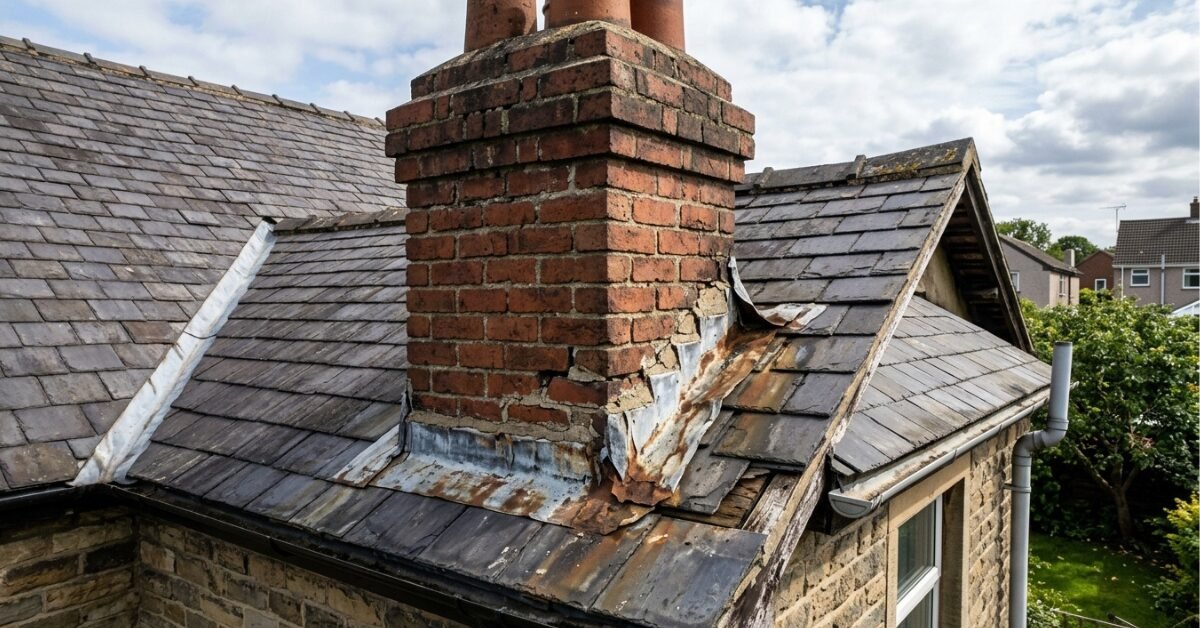
- Damp patches or water stains on ceilings or walls, particularly near chimneys or roof windows, are among the most common indicators that flashing has failed somewhere above.
- Visible cracks, gaps, or splits in the flashing itself. If you can spot these from the ground using binoculars, the flashing needs attention sooner rather than later.
- Flashing that lifts or pulls away from the wall or chimney. Wind can work its way under loose flashing over time, breaking the seal and allowing water in.
- Moss or algae growing around the flashing area. This is often a sign that moisture is being retained nearby, which can speed up deterioration.
- Recurring leaks in the same spot. If a roof leak keeps recurring after repairs, failed flashing is often the underlying cause that has been overlooked.
- If you notice any of these signs, it is worth having a roofer take a look. Catching flashing problems early is always far cheaper than dealing with the water damage that follows if they are left.
If you notice any of these signs, it is worth having a roofer take a look. These issues are among the most common causes of roof leaks, and catching them early is always far cheaper than dealing with the water damage that follows if they are left.
If you are concerned about your roof, explore our roofing services at RBG Roofing Ltd. We are always happy to offer honest, professional advice.
How to Install Lead Flashing?
The process of lead flashing installation looks straightforward, but getting it right requires experience, the right tools, and a good understanding of how water behaves on a roof. These are the most common installation scenarios in UK homes.
Step 1: Prepare the Surface
Any old or damaged flashing is removed first before any new work begins. The brickwork, mortar, and tiles around the area are carefully inspected for signs of wear, cracking, or deterioration. If any damage is found, such as crumbling mortar, loose bricks, or broken tiles, it is repaired and made good before the new flashing goes on. This step is important because fitting new flashing over existing damage will only lead to the same problems returning further down the line.
Step 2: Measure and Cut the Lead
Once the surface is prepared, the lead sheet is measured carefully to match the exact dimensions of the area being covered. Accurate measuring at this stage saves time and avoids waste. The lead is then cut to size using tin snips or a sharp lead knife, with a straight edge or chalk line used to guide the cut. Clean, precise cuts are essential; rough or jagged edges create weak points where water can eventually seep in.
Step 3: Shape the Lead
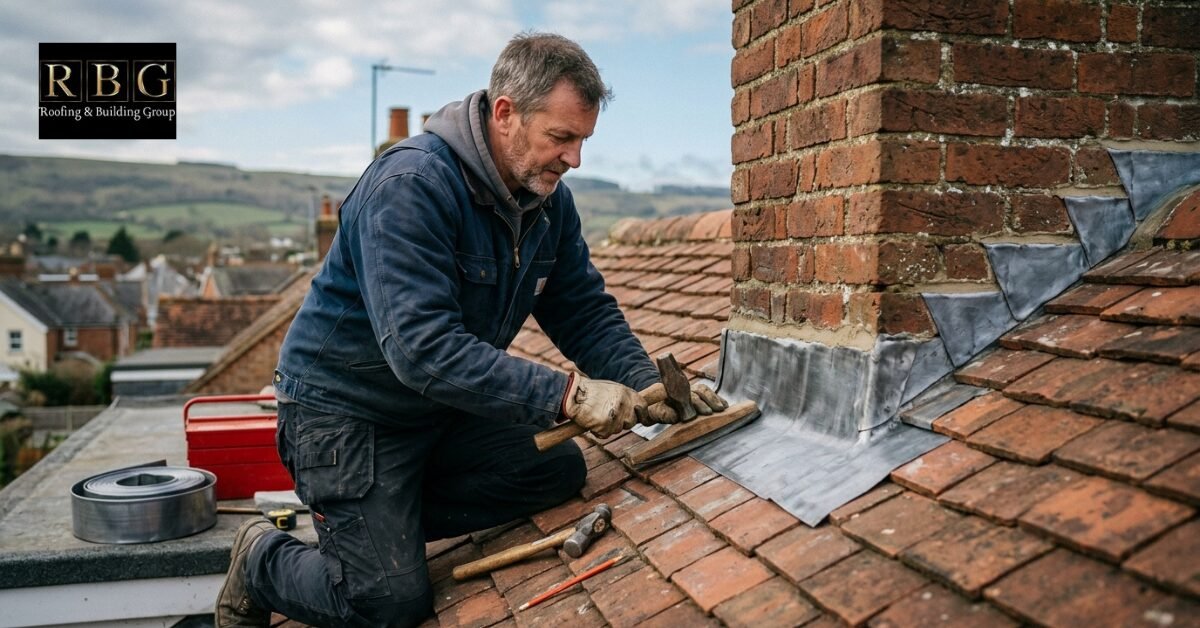
With the lead cut to size, it is then dressed into shape using a wooden dresser and a bossing mallet. The roofer works the lead carefully, pressing and shaping it so that it follows the contours of the tiles and brickwork exactly. The goal is for the lead to sit completely flush against both surfaces with no gaps, lifted edges, or air pockets underneath. This is the step that requires the most skill and experience, as poorly shaped flashing will not create a reliable watertight seal.
Step 4: Fix It in Place
Once shaped, the top edge of the flashing is tucked into a chase, a horizontal groove cut into the mortar joint of the brickwork with a cold chisel or angle grinder. The flashing is then secured firmly inside the chase using lead clips or lead wedges, which hold it in position and prevent it from being lifted or pulled away by wind over time. This fixing method has been used by roofers for generations and remains the most reliable way to anchor lead flashing securely.
Step 5: Seal the Joint
With the flashing fixed in place, the top edge where it meets the brickwork is pointed with fresh mortar or a suitable lead sealant. This seals the chase and completely locks the top edge of the flashing, leaving no gap for water to get behind it. The mortar is finished neatly and left to cure fully before the roof is exposed to rain. This final seal is what completes the watertight barrier and ensures the flashing performs as it should for years to come.
Lead Flashing Durability and Cost Factor in the UK
This is one of the most reassuring things about lead flashing: when it is properly installed and occasionally looked after, it can last between 50 and 100 years. In many older UK properties, the original lead flashing fitted decades ago is still doing its job perfectly well today. However, the lifespan can vary depending on the type of flashing, where it sits on the roof, and how well it has been maintained.
- Step Flashing: lasts 50 to 80 years
- Soaker Flashing: lasts 60 to 100 years
- Valley Flashing: lasts 50 to 80 years
- Apron Flashing: lasts 40 to 70 years
- Saddle Flashing: lasts 40 to 70 years
The thickness of the lead and the quality of the original installation are the two biggest factors that determine how long your flashing will last. Correctly shaped, fixed, and sealed flashing will always outlast work that has been rushed or poorly fitted. A roof check every few years is the simplest way to catch small issues before they become costly ones.
Cost of Lead Flashing in the UK
Lead flashing is a premium roofing material, and its cost reflects the quality it delivers. On average, in the UK, lead sheet costs between £2.50 and £4.50 per kg. A typical installation job may require around 10 to 20 kg of lead, bringing the material cost alone to approximately £25 to £90. While the upfront material cost is higher than alternatives, the exceptional lifespan of lead flashing makes it a highly cost-effective choice in the long run. Homeowners can expect to pay:
- Step Flashing: £150 to £300
- Soaker Flashing: £100 to £250
- Valley Flashing: £200 to £400
- Apron Flashing: £100 to £200
- Saddle Flashing: £150 to £300
Why Local Roofers Are Better for Lead Flashing Work
When it comes to lead flashing, hiring a local roofer makes a significant difference. Local roofers understand the specific weather conditions, building styles, and roofing materials common in your area, which means they are far better placed to carry out work that lasts.
Here is why local roofers are the better choice for lead flashing work:
- Local Knowledge: They understand how your area’s weather affects roofing materials. In areas like the Forest of Dean and Hereford, where rainfall is high, this knowledge is invaluable.
- Faster Response: They can reach you quickly, which matters when you have a leak or an urgent flashing issue that needs attention before further damage occurs.
- Accountability: They rely on their reputation within the community. They are far more likely to deliver quality work because their business depends on it.
- Better Value: They have lower travel costs and overhead than national companies, often resulting in better value for the same quality of work.
- Ongoing Support: They can easily return for follow-up inspections or any further work needed down the line.
For anything beyond applying a temporary sealant, we always recommend calling qualified local roofers in the Forest of Dean. At RBG Roofing Ltd, we provide professional lead flashing repairs, replacements, and inspections across all our service areas.
Conclusion
Lead flashing is a small but vital part of your roof. It quietly protects the most vulnerable points of your home from water damage, often for decades without needing any attention at all.
If you have not had your roof checked in a while, or if you have noticed any of the warning signs mentioned in this guide, it is worth getting a professional opinion sooner rather than later. A small issue with lead flashing caught early is a straightforward fix. Left alone, it can turn into a much more costly problem.
If you have any concerns about your lead flashing or your roof in general, contact us today. We are always happy to take a look.
FAQs
Can I repair lead flashing myself?
Small, accessible repairs may be manageable for a confident DIYer. However, most flashing work, particularly around chimneys and roof valleys, is best left to a qualified roofer to ensure it is sealed correctly and safely.
Is lead flashing better than alternatives?
For most pitched roof applications in the UK, yes. Lead is more flexible, more durable, and significantly longer-lasting than most modern alternatives.
How often should lead flashing be checked?
A general roof inspection every two to three years is a good habit. Always have it checked after any severe weather, such as a storm or heavy snowfall.
