
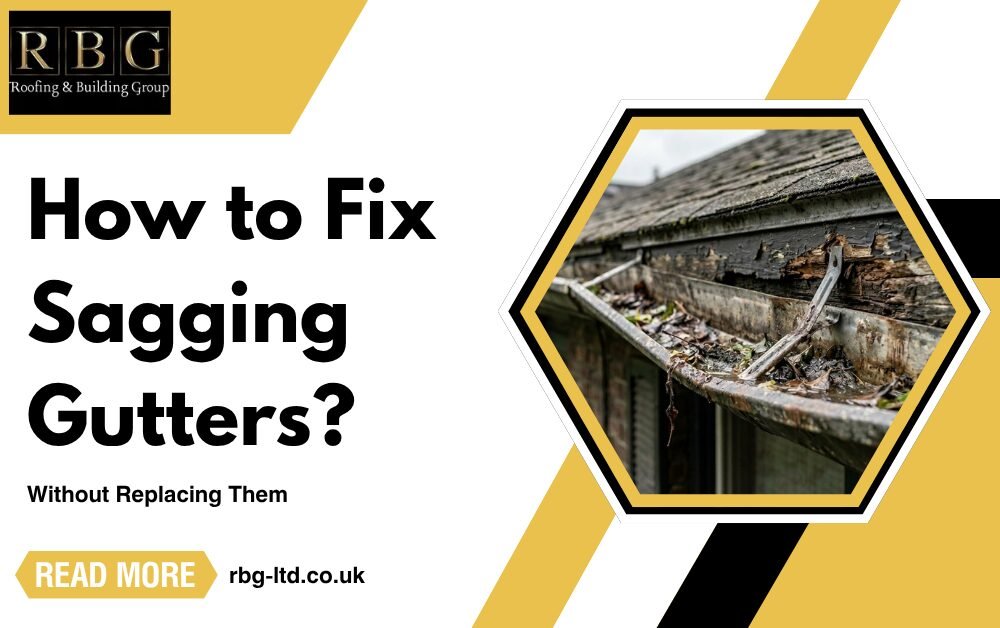
Sagging gutters are one of the most common and damaging roofline problems homeowners in the UK face and one of the most overlooked. What starts as a slight dip in your guttering can quickly turn into overflowing water, damp walls, damaged fascia boards, and even foundation problems.
The good news? In many cases, fixing sagging gutters is entirely achievable, if you catch the problem early and know what you’re doing. In this guide, we’ll walk you through everything: what causes gutters to sag, how to diagnose the issue,how to fix sagging gutters yourself, and when it’s time to call a professional roofing and guttering specialist.
What Causes Gutters to Sag?
Before you grab your ladder, it’s important to understand why your gutters are sagging. There’s almost always an underlying cause and fixing the symptom without fixing the cause means the problem will return.
1. Loose or Failing Gutter Brackets: The most common cause. Gutter brackets (also called hangers) hold the guttering to the fascia board. Over time, screws can work loose, brackets can corrode, or the fascia board itself can rot, causing the gutter to pull away from the roofline and sag. If you’re noticing your gutters falling off the house or pulling away at the edges, failed brackets are almost always to blame.
2. Weight from Debris and Standing Water: Gutters clogged with leaves, moss, and mud become extremely heavy. That added weight puts enormous stress on the brackets and can cause even well-fitted guttering to bow and droop over time, resulting in damaged gutters that no longer function properly.
3. Incorrect Gutter Pitch: Gutters must be installed at a slight downward angle, typically around 5–6mm of fall for every 3 metres of run, so water flows toward the downpipe. If the pitch is wrong (or has shifted), water pools in the gutter, adds weight, and causes sagging.
4. Thermal Expansion and Contraction: uPVC gutters expand and contract with temperature changes. In cold UK winters followed by warm summers, this repeated movement can loosen joints and brackets over years.
5. Age and General Wear: Most guttering systems last 20–30 years. As they age, the materials degrade, brackets corrode, and the entire system becomes less structurally sound.
6. Ice and Frost Damage: During freezing temperatures, water trapped in gutters turns to ice, expanding and placing enormous pressure on joints and fixings.
Tools and Materials You’ll Need
Before starting any gutter repair, gather the following:
- A sturdy, stable ladder (ideally with a standoff bracket)
- Safety gloves and eye protection
- A cordless drill or screwdriver
- New gutter brackets/hangers
- Stainless steel or zinc-coated screws (never standard steel, they rust)
- A spirit level or string line
- Gutter sealant/silicone
- A garden trowel or gutter scoop (for clearing debris)
- A bucket and garden hose
Safety first: Always have someone hold your ladder at the base, and never lean out beyond arm’s reach. If your roofline is high, two storeys, or difficult to access safely, leave it to a gutter specialist.
How to Fix Sagging Gutters: Step-by-Step
Step 1: Inspect and Clean Your Gutters First
You can’t properly assess a sagging gutter until it’s clear of debris. Using your scoop or trowel, clear out moss, leaves, and compacted dirt. Flush the gutter through with a garden hose and watch how the water flows or doesn’t.
Look for:
- Pooling water (indicates incorrect pitch or a low spot)
- Water dripping behind the gutter (indicates the gutter has pulled away from the fascia)
- Overflowing at specific points (indicates a blockage or a dip)
- Visible cracks, splits, or gaps at the joints
This step tells you exactly where the problem is before you start making repairs.
Step 2: Identify Loose or Damaged Brackets
With the gutter clean and dry, physically push up on different sections of the guttering. Any area that moves significantly has a loose or broken bracket behind it. Mark these spots with tape or chalk.
Check the condition of each bracket:
- Is the screw still in the fascia, or has it pulled out?
- Is the bracket itself cracked or corroded?
- Is the fascia board behind it soft, spongy, or rotten?
If the fascia board is rotten, a simple bracket replacement won’t hold. The fascia will need to be repaired or replaced first, this is a job for a professional roofer, as the fascia is part of your roofline structure.
Step 3: Replace Loose or Broken Brackets
For brackets where the screw has simply worked loose:
- Remove the section of guttering from the affected bracket (most uPVC guttering simply unclips)
- Remove the old bracket
- Fill the old screw hole with an exterior-grade wood filler and allow it to cure fully
- Refit the bracket in a new position (slightly to the side of the old hole), using fresh stainless steel screws driven into solid wood
- Reattach the guttering to the new bracket
Bracket spacing matters: Standard guttering should have a bracket every 600mm (or every 1 metre for half-round guttering). If your gutters are under-bracketed, add additional brackets between existing ones, this is one of the most effective long-term fixes for fix gutter sag.
Step 4: Re-Establish the Correct Pitch
Once the brackets are sorted, you need to make sure the guttering runs at the right angle toward the downpipe.This gutter slope adjustment is where many DIY repairs fall short, people fix the brackets but leave the pitch incorrect, so water continues to pool.
Here’s how to set the correct fall:
- Tie a string line from the highest point of the gutter run (furthest from the downpipe) to the downpipe outlet
- Use a spirit level to add the correct fall: approximately 1:600, that’s 1mm of drop for every 600mm of horizontal run
- Adjust your brackets so the gutter follows this slope consistently
- Check by running water through the system. It should flow freely to the downpipe without pooling
Step 5: Reseal Any Leaking Joints
While you’re up there, check every gutter joint. Over time, the rubber seals inside uPVC unions degrade, causing leaks that can drip behind the fascia and cause timber rot.
To reseal a joint:
- Unclip the two gutter sections from the union connector
- Clean out the old sealant with a scraper
- Apply a fresh bead of gutter sealant or replace the rubber seal
- Reconnect the sections and leave to cure
If a joint is cracked or the connector is broken, replace the union entirely, they’re inexpensive and available at any builder’s merchant.
Step 6: Test the Whole System
With everything repaired, run your garden hose at full pressure from the highest point of the gutter run and watch the entire system. Look for:
- Consistent water flow toward the downpipe, no pooling
- No drips from joints or unions
- No water running down behind the gutter or fascia
- Downpipe flowing freely with no blockages at the bottom outlet
If everything drains cleanly, your repair is complete. If you still see pooling or drips, there may be a more complex issue at play.
How to Prevent Gutters From Sagging Again
Fixing sagging gutters is only half the battle. Keeping them in good condition year-round is what protects your home long-term.
Clean your gutters twice a year. Autumn (after leaf fall) and spring are the best times. Regular cleaning prevents the weight build-up that puts stress on brackets.
Fit gutter guards. Mesh or brush-style gutter guards significantly reduce how much debris gets in, particularly useful if you have overhanging trees.
Inspect after severe weather. Heavy snow, ice, or storms can dislodge brackets and shift pitch. A quick visual check from the ground after bad weather can catch problems early.
Check fascia boards annually. Rotten fascia is the number one reason guttering fails. Catching soft spots early, before the fascia needs full replacement, saves significant money.
Upgrade to uPVC where possible. If you have old cast iron or aluminium guttering, it’s significantly heavier and more prone to pulling away from the fascia. Modern uPVC guttering systems are lightweight, durable, low-maintenance, and typically last 25–30 years when properly installed.
uPVC Guttering Replacement: When to do a full upgrade
If your gutters are more than 20 years old and showing widespread problems, sagging in multiple places, cracked joints, leaking unions, and failing fascia, a full guttering replacement is often more cost-effective than repeated repairs.
Modern uPVC fascia and guttering systems offer several advantages:
- Lightweight and durable — no rusting, no rotting, no repainting
- Low maintenance — an occasional rinse is all that’s needed
- Excellent water management — properly installed uPVC systems handle even heavy UK rainfall without issue
- Enhanced kerb appeal — clean, white (or coloured) uPVC instantly improves the appearance of your roofline
- Long lifespan — quality uPVC guttering installed correctly lasts 25–30 years
A full uPVC fascia and guttering installation by an experienced roofing contractor is an investment that protects your home and eliminates the recurring cost of patch repairs.
Signs You Need a Professional Gutter Repair
DIY gutter repairs work well for minor bracket issues and re-pitching. But there are situations where calling a professional roofer is the right and safest decision:
Your fascia board is rotten. Replacing fascia is a roofline job that requires safely removing tiles or lead flashing at the eaves. It’s not a weekend DIY task.
The guttering is pulling away at multiple points. Widespread sagging often indicates a systemic problem, either the entire guttering system is at the end of its life, or the fascia along the whole run has deteriorated.
You have cast iron guttering. Old cast iron systems are heavy, brittle, and require specialist handling. Replacement with modern uPVC is almost always the better long-term solution.
Your property is two storeys or higher. Working at height is dangerous without the right equipment and training. A professional roofer has the proper access equipment, insurance, and experience to work safely.
Water is getting behind the fascia. If you’re seeing damp patches on interior walls, or the paint behind your guttering is peeling, water has already been getting behind the roofline. You need a professional inspection to assess the damage.
At RBG Roofing & Building Ltd, we’ve been solving gutter and roofline problems across Forest of Dean, Hereford, Chepstow, Abergavenny, and Gloucestershire for over 36 years. From quick bracket repairs to complete uPVC fascia and guttering replacements, our experienced team delivers lasting results with no call-out charge and a free, no-obligation quote.
Don’t let sagging gutters become a damp problem. Get in touch with our roofers in Forest of Dean today, we’ll assess your gutters honestly and give you a fair price to fix them properly.
Conclusion
Sagging gutters are easy to ignore but costly to leave. Whether it’s a loose bracket or a full system that’s seen better days, acting early is always the cheaper option. Use this guide to tackle minor repairs yourself but if the problem runs deeper, don’t hesitate to call in the experts.
FAQs
How much does it cost to fix a sagging gutter in the UK?
For a simple bracket replacement, materials cost very little often under £10–£20. If you’re hiring a professional, expect to pay £80–£200 depending on the extent of the work and access requirements. A full uPVC gutter replacement for a typical semi-detached home typically ranges from £400–£1,000+, depending on the length of run and whether fascia replacement is needed.
Can sagging gutters cause damp?
Yes, this is one of the most serious consequences. When gutters sag and overflow, water runs down external walls, saturates brickwork, and can penetrate internally, leading to damp patches, mould, and structural damage. Fixing gutters early is always far cheaper than treating damp later.
How long does gutter repair take?
A straightforward bracket replacement takes an experienced roofer 1–2 hours. A full gutter replacement on a standard house is typically a one-day job.
