
If you’ve ever noticed a thin strip of metal around your chimney, skylights, or where your roof meets a wall, that’s roof flashing. It’s one of the most important, yet most overlooked, parts of any roofing system. When it fails, water gets in. And water getting in is where the expensive problems start.
In this guide, RBG Roofing Ltd explains exactly what roof flashing is, the different roof flashing types used on UK homes, the materials available, and what’s involved in having it installed or replaced properly.
What Is Roof Flashing?
Roof flashing is a thin layer of waterproof material installed at joints, seams, and transitions on a roof where two surfaces meet. These are the most vulnerable spots on any roof because they’re where water naturally collects and tries to find its way in.
Think of flashing as a waterproof seal between your roof covering (tiles, slates, felt) and any vertical surface it meets such as a chimney, a wall, a dormer window, or a roof valley. Without properly fitted flashing, rainwater would seep into the gaps and cause significant damage over time, including rot, damp, and structural deterioration.
In the UK, where rainfall is frequent and persistent, properly installed and maintained roof flashing isn’t optional. It’s essential.
Why Is Roof Flashing So Important?
Roof flashing plays a critical role in keeping your home watertight. Here’s why it matters:
Prevents water ingress: Flashing directs rainwater away from joints and seams, one of the leading causes of roof leak problems.
Protects against damp: Water that gets behind tiles or into the roof structure causes damp, which spreads quickly and is costly to treat.
Preserves structural integrity: Long-term water infiltration weakens timber roof structures, rafters, and joists.
Extends roof lifespan: Properly sealed joints mean your overall roofing system lasts longer with fewer emergency repairs.
Prevents interior damage: Leaks from failed flashing cause ceiling stains, damaged insulation, mould growth, and damage to walls and belongings.
Types of Roof Flashing
There are several types of roof flashing, each designed for a specific location or purpose on the roof. Understanding the different kinds of roof flashing helps you know what your roofer is talking about and why each type is needed.
1. Step Flashing
Step flashing is used where a sloped roof meets a vertical wall. For example, where a roof runs alongside a house extension or the side of a chimney breast. It consists of individual L-shaped pieces of metal, each one overlapping the next like steps going up the slope, hence the name.
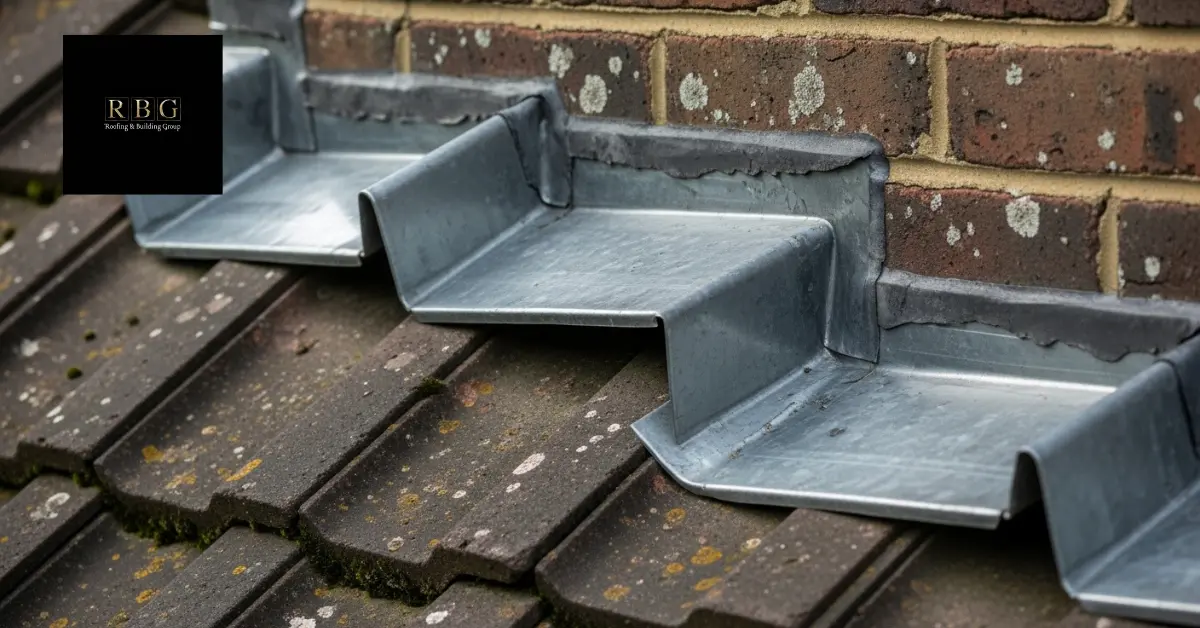
Each piece of step flashing sits under one course of tiles or slates and overlaps against the wall. When done correctly, step flashing creates a continuous waterproof barrier that moves with the natural movement of the building.
2. Apron Flashing (Lead Soakers)
Apron flashing runs horizontally across the base of a vertical surface, most commonly at the front face of a chimney or the bottom of a dormer wall. It’s a single piece of flashing shaped to sit against the lower edge of the vertical surface and overlap the roof tiles below.
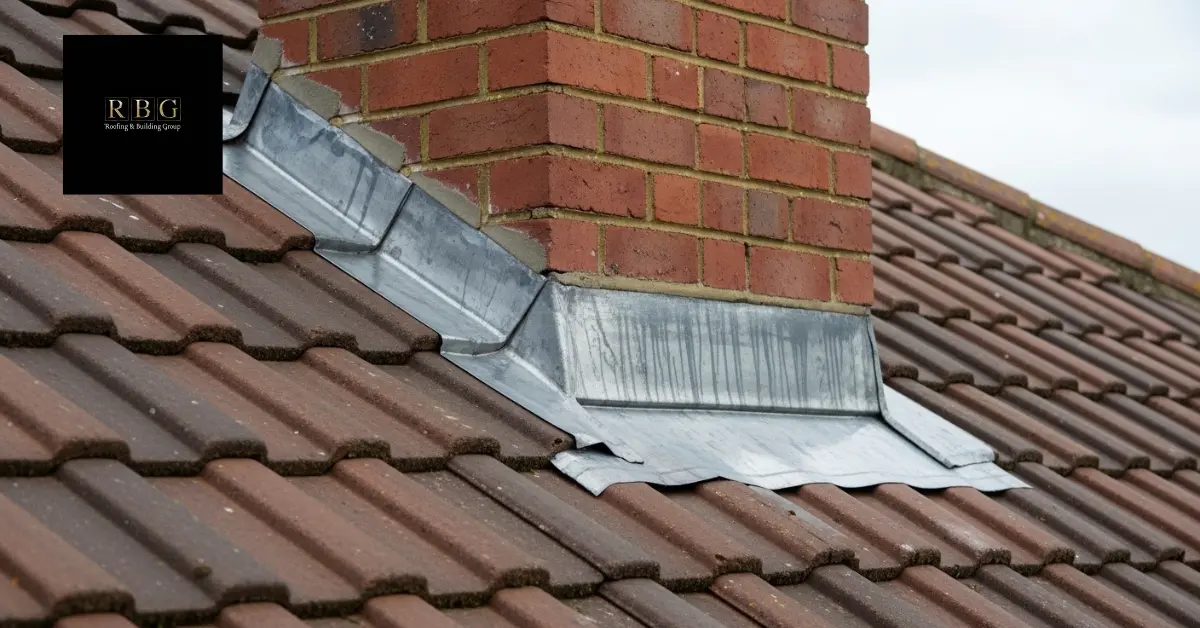
This type is sometimes called a front apron, and it works alongside step flashing to completely seal the perimeter of a chimney or similar structure.
3. Valley Flashing
A roof valley is the internal angle formed where two roof slopes meet. Rainwater naturally flows into this channel, meaning valleys carry a high volume of water and are especially vulnerable to leaks.
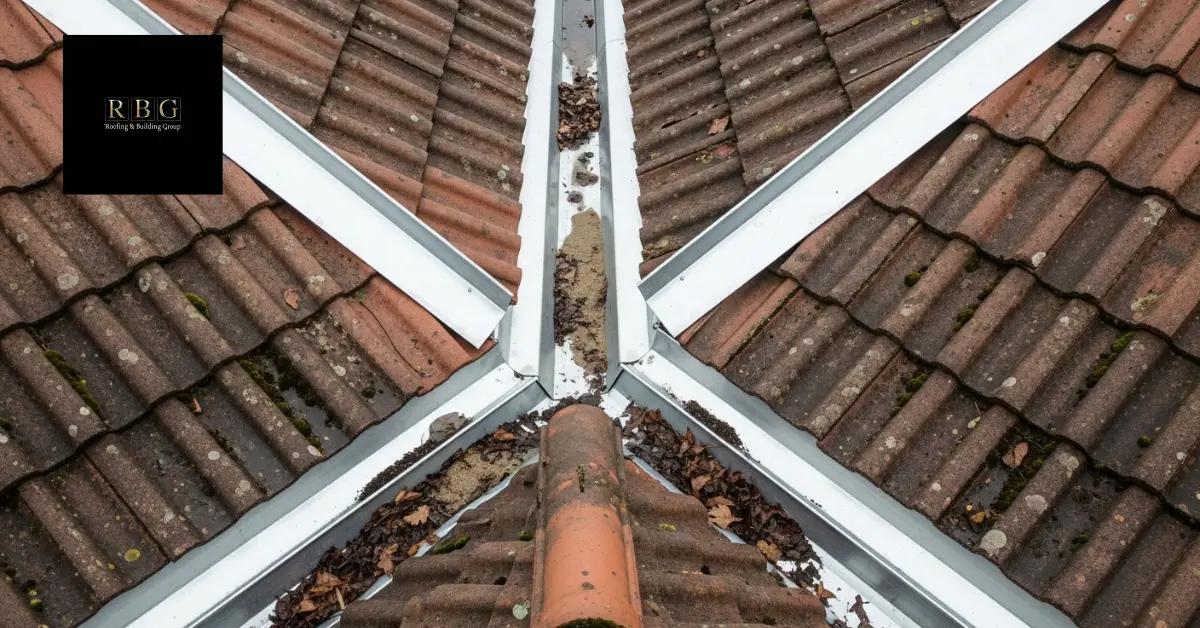
Valley flashing is installed along the full length of the valley to carry water down and off the roof. It can be open (visible metal channel) or closed (hidden beneath cut tiles), depending on the roof design and aesthetic preference.
4. Chimney Flashing
Chimneys require a combination of flashing types to be fully waterproofed, typically step flashing up both sides, an apron at the front, and back gutter flashing (also called a back apron or soaker) at the rear where the chimney meets the higher slope of the roof.
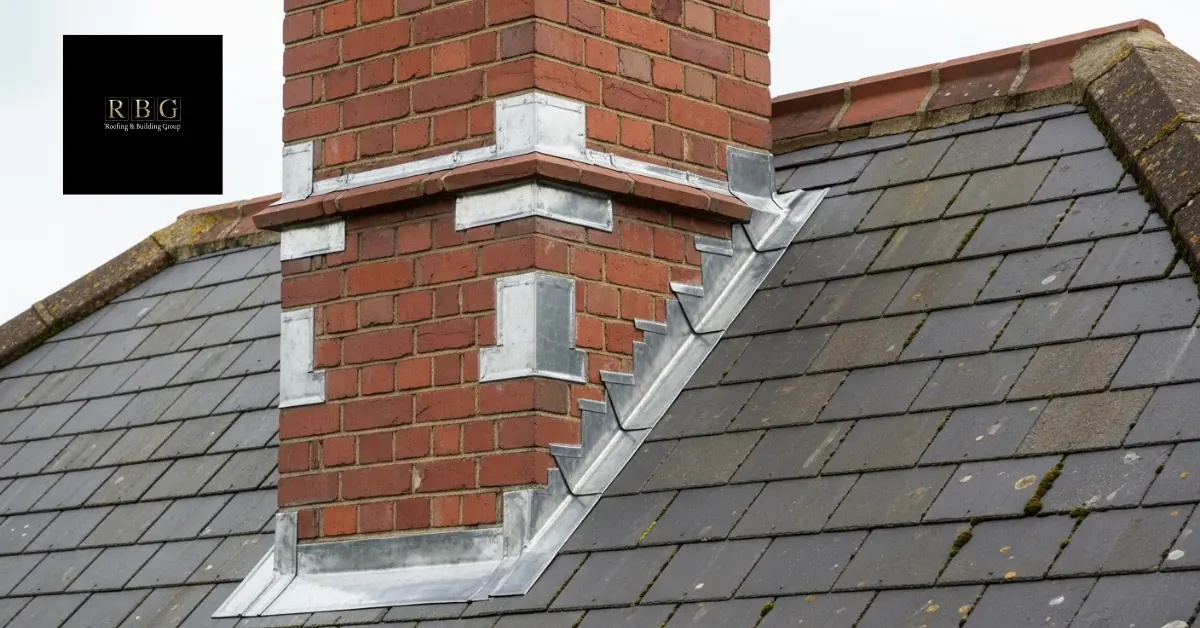
Chimney roof flashing is one of the most common areas where leaks develop on older UK homes, often because the original lead or mortar has cracked, lifted, or simply worn out after decades of exposure.
5. Soakers
Soakers are small hidden pieces of metal (usually lead) placed beneath the tiles or slates at a junction, typically used alongside step flashing. They sit flat on top of one tile and tuck under the next, creating an invisible secondary layer of waterproofing beneath the surface.
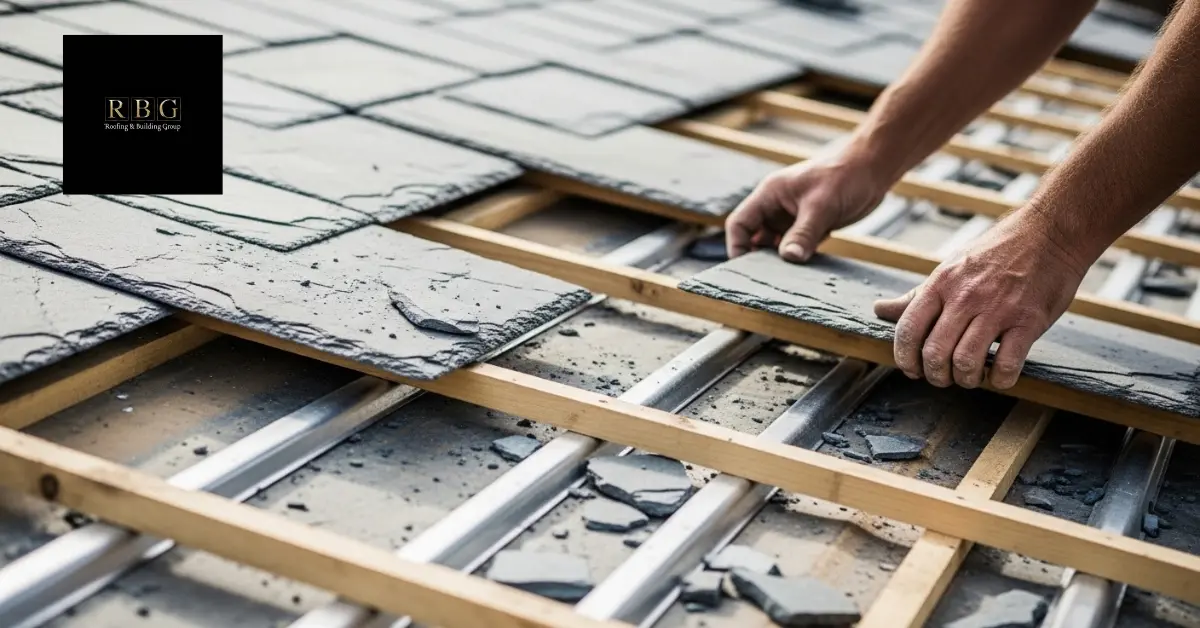
Soakers are a key part of a well-specified roofing system on properties with slate or plain tile roofs.
6. Dormer Flashing
Dormers, the box-shaped structures that project out from a sloping roof, have multiple junction points where the dormer walls meet the main roof. Each of these joints needs to be properly flashed. Dormer flashing often involves a combination of step flashing, apron flashing, and sometimes valley flashing depending on the dormer design.
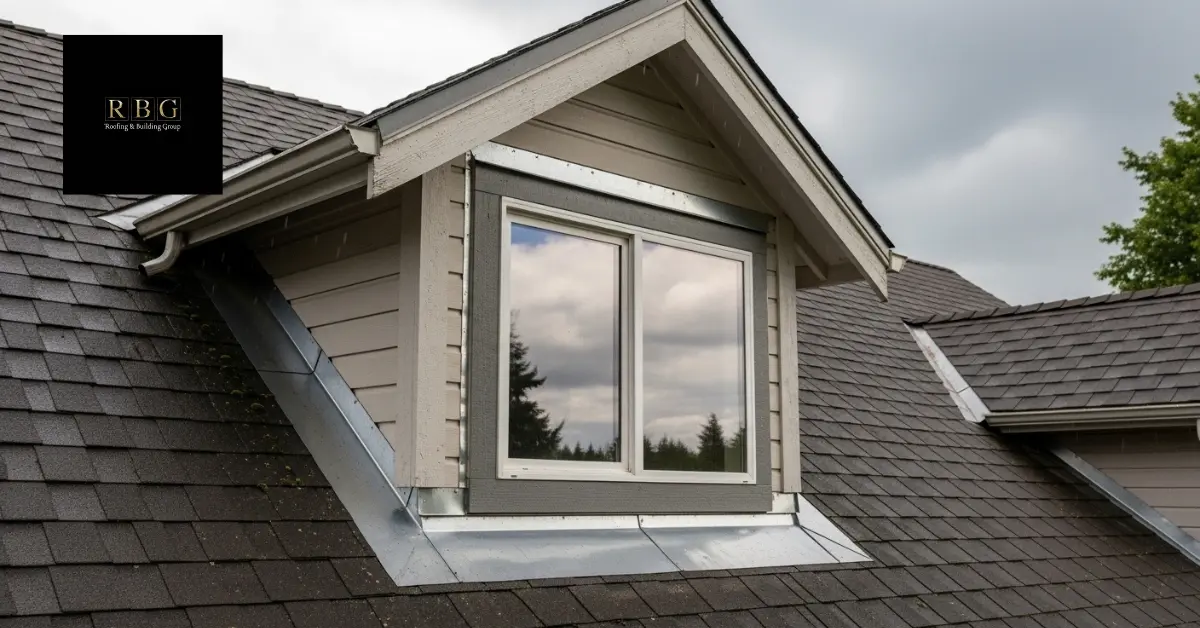
Poorly flashed dormers are a very common source of leaks in older properties.
7. Skylight / Rooflight Flashing
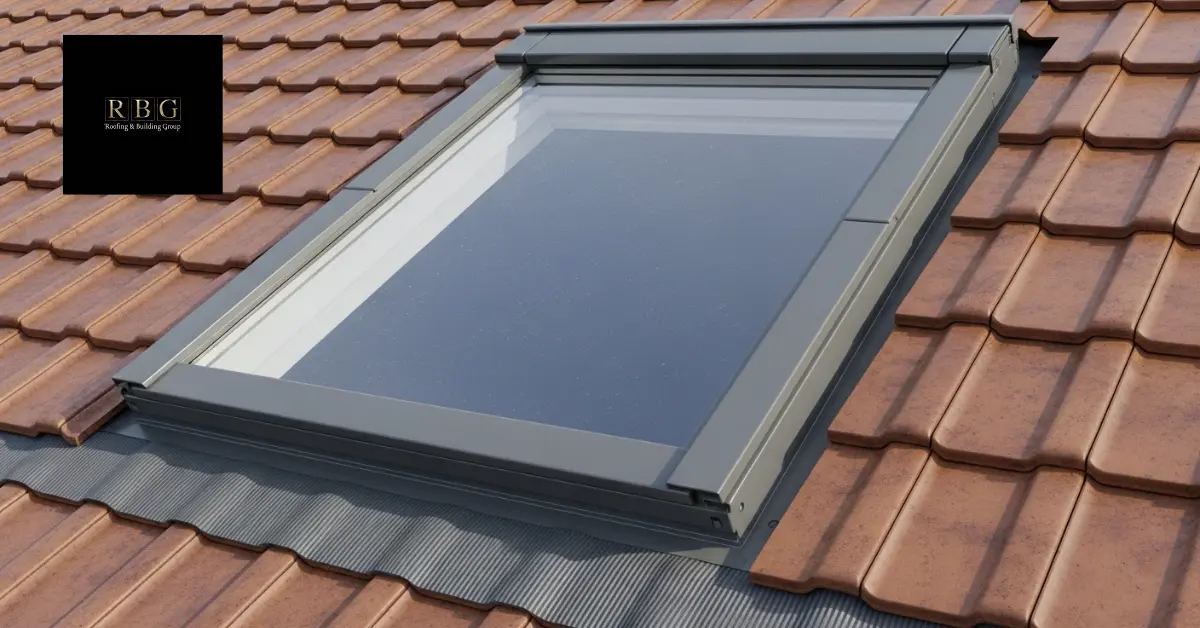
Skylights and rooflights are factory-fitted with flashing kits specific to the manufacturer and product. These kits are designed to seal the skylight frame to the surrounding roof covering. If the wrong kit is used, or if it’s installed incorrectly, leaks around skylights are almost guaranteed.
8. Flat Roof Flashing
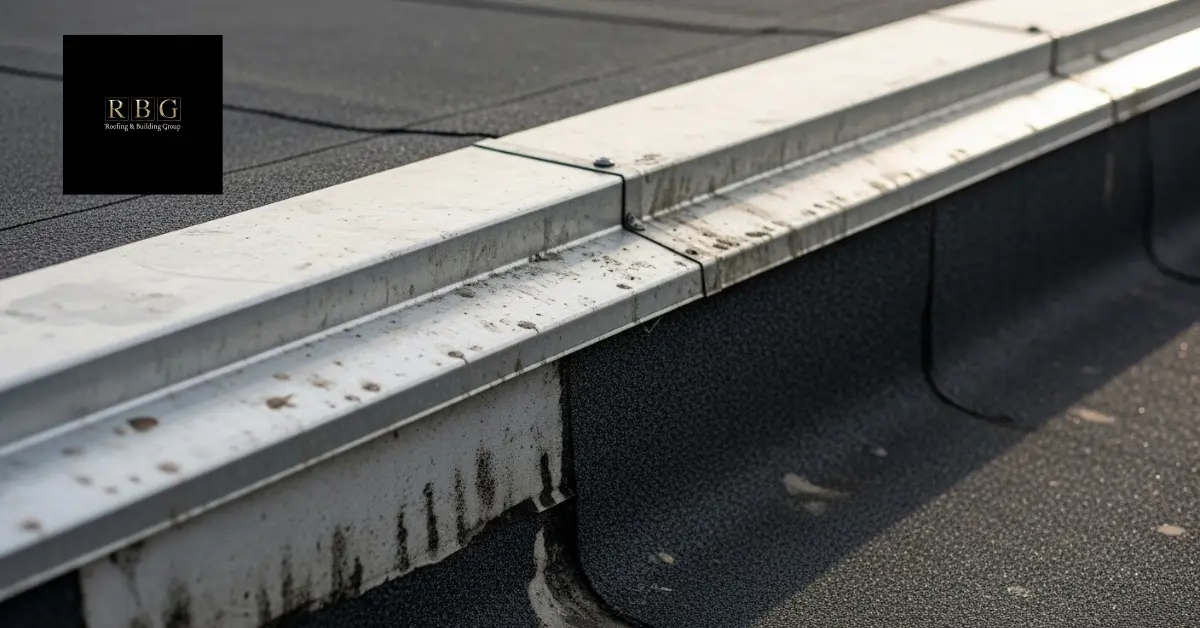
On flat roofs, flashing is used at the perimeter where the flat roof membrane meets a parapet wall, fascia board, or upstand. It’s typically formed from lead, aluminium, or a compatible flashing strip material and is essential in preventing water from getting under the flat roof edge, one of the most common failure points on flat roofs.
Materials Used for Roof Flashing in the UK
The material chosen for flashing on a roof affects its durability, performance, cost, and appearance. Here are the most common options used on UK roofs:
Lead
Lead is the traditional and most widely used flashing material on UK homes. It’s been used for centuries and for good reason. It’s highly durable, extremely flexible, easy to work with, and can last 50–100 years when properly installed.
Lead is particularly suited to complex shapes and curved surfaces because it can be dressed (shaped and moulded) by hand. It’s the preferred material for chimney flashing, valley flashing, and soakers on period and traditional properties.
The main downsides are cost (lead is expensive) and weight. It’s also occasionally targeted by thieves due to its scrap value, which is worth bearing in mind on accessible parts of a roof.
Zinc
Zinc is a popular alternative to lead and is widely used in modern and contemporary construction across the UK. It’s lightweight, corrosion-resistant, and has a long lifespan of 40–80 years. Zinc is stiffer than lead, which makes it less suitable for intricate dressing but perfectly adequate for most standard applications.
It also has a distinctive silvery-grey appearance that weathers to a natural patina over time.
Aluminium
Aluminium is lightweight, rust-resistant, and cost-effective. It’s commonly used on modern builds and flat roofing systems. It’s not as workable as lead but is well-suited to factory-formed shapes and flat roof perimeter details.
One consideration with aluminium is that it should not be used in direct contact with concrete, mortar, or certain other metals (such as copper) as it can corrode through a chemical reaction.
Copper
Copper flashing is premium quality and extremely long-lasting, potentially 100+ years. It develops a distinctive green patina over time. Copper is particularly common on heritage and listed buildings and is highly regarded for its durability and appearance.
It’s significantly more expensive than lead or zinc, so it’s typically reserved for high-specification or restoration projects.
Proprietary Flashing Tape / Strip
Self-adhesive flashing tapes and pre-formed plastic or rubberised strips are widely available and used for temporary repairs or lower-specification applications. Products like Flashband and similar self-adhesive rolls can be useful in emergency situations but are not a substitute for properly installed metal flashing.
On a well-specified roofing job, a professional roofer will almost always recommend lead, zinc, or aluminium as a permanent solution.
How Is Roof Flashing Installed?
Roof flashing installation is skilled work that should always be carried out by an experienced roofer, especially as part of wider roof repair services. The general process varies depending on the type of flashing, but here’s how chimney and step flashing is typically installed, as it’s the most common scenario on UK homes:
Step 1: Remove existing tiles or slates around the junction. The roofer carefully lifts and removes the tiles in the affected area to expose the roof deck and existing flashing (if any).
Step 2: Remove old flashing. Any old, cracked, or failed flashing is removed. Old mortar pointing holding lead into brickwork is raked out.
Step 3: Cut and form new flashing. New lead (or other chosen material) is cut to size and dressed to shape. For step flashing, individual pieces are folded to the correct angle to match the roof pitch. For apron and back gutter flashing, the lead is shaped to wrap neatly around the base and back of the chimney.
Step 4: Fix the flashing in place. Step flashing is secured under each course of tiles as they are relaid. Lead is tucked into raked-out mortar joints in the brickwork, these horizontal slots are called ‘chases’.
Step 5: Point and seal. The chases are then re-pointed with fresh mortar (or lead wedges are used to secure the flashing mechanically) to lock the top edge of the flashing firmly into the brickwork.
Step 6: Refix tiles. The surrounding tiles or slates are re-bedded and refixed, and the repaired area is checked for correct alignment and weathertightness.
Step 7: Inspection. The completed work is inspected to ensure all joints are sealed, all overlaps are correct, and there are no gaps where water could penetrate.
How Long Does Roof Flashing Last?
The lifespan of roof flashing depends heavily on the material used and the quality of installation:
- Lead flashing — 50 to 100 years with proper installation
- Zinc flashing — 40 to 80 years
- Copper flashing — 80 to 100+ years
- Aluminium flashing — 20 to 40 years
- Proprietary flashing tape — 5 to 15 years (not a permanent solution)
Even good-quality flashing on a roof can fail prematurely if it was incorrectly installed, if the pointing has failed, or if it’s been physically damaged, for example by falling debris or during building work.
Signs Your Roof Flashing May Need Attention
Many homeowners don’t notice failing flashing until a leak appears indoors. By that point, water has often been getting in for some time. Watch out for these early warning signs:
- Damp patches or staining on internal walls or ceilings, particularly near a chimney breast
- Water stains around a skylight or dormer window
- Visible cracks or gaps in mortar around chimney flashing
- Lead flashing that looks lifted, buckled, or has pulled away from the wall
- Missing sections of flashing
- Mould or musty smells in the loft
- Crumbling or deteriorated mortar at chimney base
If you notice any of these signs, it’s worth having a roofer inspect the flashing before the problem develops further.
Can I Repair Roof Flashing Myself?
While minor temporary repairs (such as applying flashing tape to a small crack as an emergency measure) can be done by a competent DIYer, roof flashing repair and replacement is not a job most homeowners should attempt to do themselves. Here’s why:
Working at height carries serious safety risks. Access to a roof requires proper scaffolding or a roof ladder and the right personal protective equipment. Without experience, the risk of injury is significant.
Beyond safety, roof flashing requires skilled workmanship. Lead dressing in particular is a traditional craft skill. Poorly fitted flashing, even if it looks acceptable from the ground, will fail and allow water ingress. The cost of putting right a badly installed repair can easily exceed the cost of having it done properly in the first place.
For anything beyond applying a temporary sealant, we always recommend calling qualified local roofers in Forest of Dean.
FAQs
How much does roof flashing repair cost in the UK?
The cost varies depending on the type and extent of the work. A straightforward chimney flashing repair might cost £150–£400. A full chimney reflash with new lead can range from £500–£1,000+ depending on the size of the chimney and access required. We always provide a free, no-obligation quote before any work begins.
How do I know if my flashing is lead or something else?
Lead flashing has a distinctive dull grey appearance and is soft to the touch — you can scratch it with a fingernail. Over time it develops a white oxidised surface. Zinc looks similar but is slightly brighter and harder. Proprietary flashing tape often has a more uniform silver or black appearance.
What is the difference between flashing and pointing?
Pointing refers to the mortar used to fill the joint between the flashing and the brickwork (and elsewhere in brickwork joints). Flashing is the waterproof metal strip itself. Both need to be in good condition to keep the joint watertight. Failed pointing is a very common cause of flashing leaks, even when the lead itself is still in good condition.
