
The main roof insulation types are mineral wool (glass or rock wool), rigid PIR boards, phenolic foam boards, EPS and XPS boards, spray foam, natural materials such as sheep’s wool and wood fibre, and multifoil. Mineral wool is the usual choice for lofts because it is affordable and easy to lay, while rigid boards suit flat roofs and rafters where space is tight. The best option depends on your roof type, available depth, and whether you are insulating from inside or outside.
A well-insulated roof does more than cut heating bills. An uninsulated home can lose around a quarter of its heat through the roof, and poor insulation or ventilation can also cause condensation, mould, and damp ceilings. This guide explains each type of roof insulation, how they compare, which one suits which roof, and the mistakes to avoid.
Why Roof Insulation Matters
Heat rises, and the roof is the largest surface between your warm rooms and the cold air outside. Good insulation helps in four ways:
- Lower energy bills: less heat escapes, so your heating works less hard.
- A more comfortable home: rooms stay warmer in winter and cooler in summer, especially top-floor bedrooms and loft rooms.
- A healthier roof structure: with the right ventilation and vapour control, insulation reduces the warm, damp air that condenses on cold timber.
- Compliance with the rules: when you replace or substantially renovate a roof, Building Regulations (Part L) set minimum thermal performance standards.
Warm Roof, Cold Roof and Hybrid: The Basics
Before comparing materials, it helps to know where the insulation goes. The position matters as much as the product.
Cold Roof
Insulation is laid at ceiling or loft-floor level, between and over the joists. The loft above stays cold, so it must be ventilated to let moisture escape. This is the simplest and cheapest method for a loft that is not used as a room.
Warm Roof
Insulation follows the roof slope, either above or between the rafters, so the structure stays warm and the loft space can be used. This is the standard approach for loft conversions and flat roofs. On a pitched roof, insulation above the rafters is usually fitted during a re-roof, while our guide on how to insulate a pitched roof from inside covers the internal option.
Hybrid Roof
A hybrid build-up combines insulation between the rafters with a layer of rigid board over or under them. It delivers higher performance without losing as much headroom as a single thick layer would.
Flat roofs have their own versions. A warm deck puts insulation above the roof deck, beneath the waterproof layer. A cold deck puts it between the joists with a ventilated gap above, and an inverted roof places it above the waterproof membrane. Warm decks are generally preferred because they lower the risk of condensation inside the roof.
Roof Insulation Types Compared
The table below gives a quick comparison. Thermal conductivity (the lambda value) shows how well a material resists heat flow: the lower the number, the better it insulates for a given thickness. The figures are typical ranges, so always check the manufacturer’s data.
| INSULATION TYPE | TYPICAL THERMAL CONDUCTIVITY (W/MK) | BEST FOR | TYPICAL COST PER M² (MATERIALS) |
|---|---|---|---|
| MINERAL WOOL | 0.032 to 0.044 | Lofts and between rafters | £8 to £10 |
| PIR / PUR BOARDS | 0.022 to 0.028 | Flat roofs and rafters | Around £23 (100mm) |
| PHENOLIC FOAM BOARDS | 0.018 to 0.023 | Tight spaces and loft rooms | Around £38 (100mm) |
| EPS BOARDS | 0.030 to 0.040 | Budget flat roofs | Around £19 (100mm) |
| XPS BOARDS | 0.029 to 0.036 | Inverted flat roofs | Around £26 (100mm) |
| SPRAY FOAM | 0.022 to 0.040 | Awkward shapes at rafter level | Around £37 |
| SHEEP’S WOOL | 0.036 to 0.044 | Eco-friendly lofts and rafters | £20 to £36 |
| WOOD FIBRE | 0.036 to 0.044 | Breathable rafter builds | From around £15 |
| CELLULOSE | 0.036 to 0.044 | Blown into lofts and between rafters | Around £12 (loose-fill) |
| MULTIFOIL | Not comparable by lambda value | Thin supplementary layer | Around £14 |
The Main Types of Roof Insulation Explained
Mineral Wool (Glass Wool and Rock Wool)
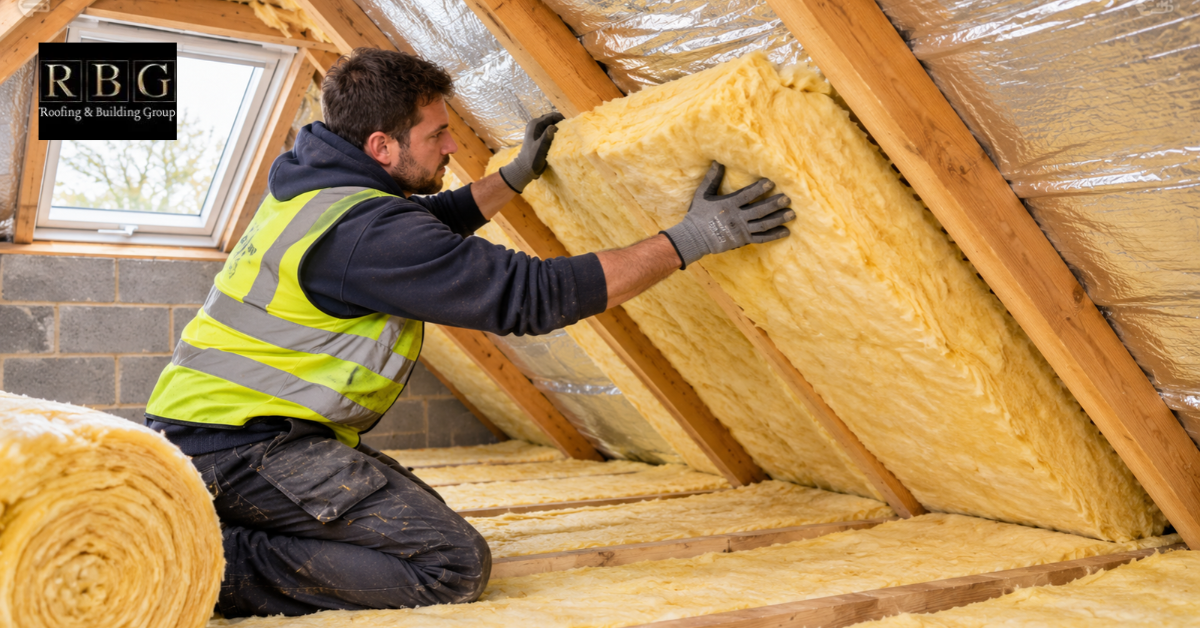
Mineral wool is the most widely used roof insulation in the UK. It is made by spinning molten glass or rock into fine fibres that trap air, and it comes as rolls to lay across loft joists, batts to fit between rafters, and loose-fill to blow into awkward spaces. Rock wool is denser and more fire-resistant, while glass wool is lighter and often cheaper.
Because the fibres trap air, mineral wool performs best when left to fluff up to its full thickness. It is flexible enough to be cut snugly around pipes, cables, and uneven rafter spacing, but it must stay dry and uncompressed to do its job.
Pros:
- Affordable and widely available from builders’ merchants and DIY stores
- Easy to cut and fit, which suits straightforward loft jobs
- Good at absorbing sound as well as heat
- Rock wool is non-combustible, which adds fire safety
Cons:
- Needs around 270mm in a loft to meet typical recommendations, so it takes up more space than rigid boards
- Loses performance if it is compressed or gets wet
- Gaps from poor cutting let heat escape
- Fibres irritate skin, eyes and lungs, so gloves, a mask and long sleeves are essential
Best for: loft floors and between rafters.
PIR and PUR Rigid Boards
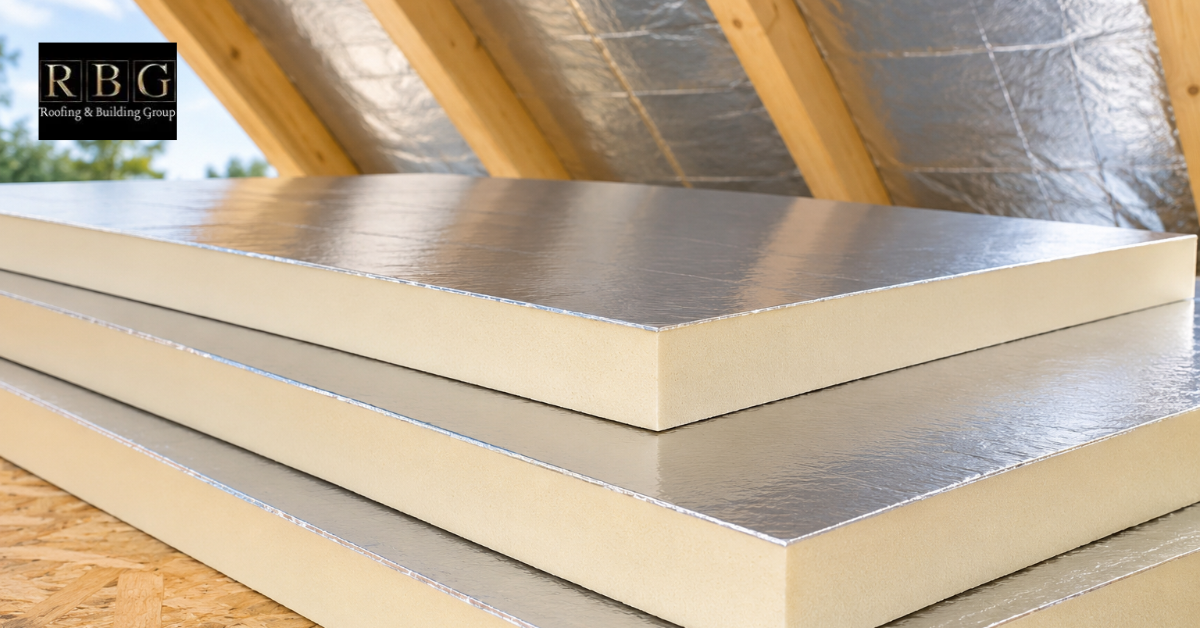
Polyisocyanurate (PIR) and polyurethane (PUR) boards are rigid, foil-faced sheets made from a closed-cell foam. The tiny sealed cells trap gas that conducts heat poorly, so a PIR board can match the performance of mineral wool at around two-thirds the thickness. That makes it popular wherever space is limited.
The boards are strong enough to support a waterproof covering on a flat roof and to take fixings under a pitched roof covering. Because they are rigid, they must be measured and cut accurately, and the joints should be tight and taped or sealed, since gaps around the edges let heat and moist air pass.
Pros:
- Thin for the performance, which saves headroom and space
- Rigid and strong enough to support a flat roof covering
- Foil facing helps resist moisture passing through the board
- Lightweight and easy to handle in large sheets
Cons:
- Costs more than mineral wool
- Needs accurate cutting and sealed joints, or performance drops
- Less forgiving than wool where rafter spacing is uneven
- Made from petrochemical-based materials, so it is not the greenest option
Best for: warm flat roofs, between and under rafters, and above-rafter systems fitted during a re-roof.
Phenolic Foam Boards
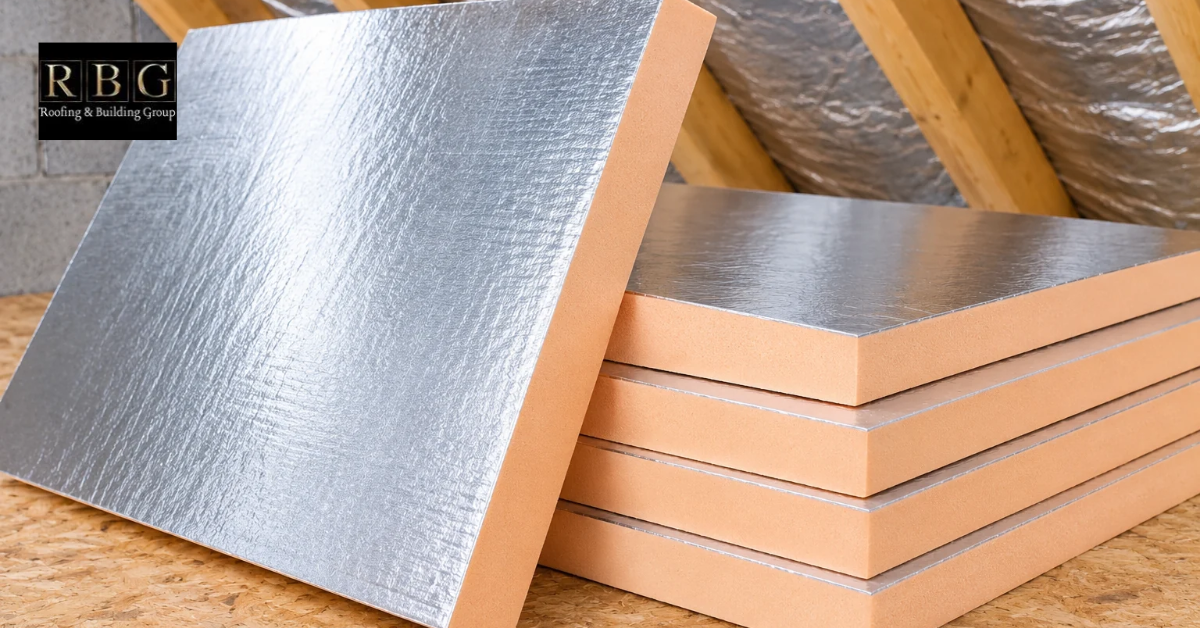
Phenolic boards look similar to PIR, with a rigid foam core and foil facings, but they have an even lower thermal conductivity. That makes them the thinnest option for a given level of performance, so they are a go-to choice in loft conversions and room-in-roof builds where every millimetre of headroom counts.
They generally cost more than other rigid boards, and manufacturers advise keeping them dry during storage and installation. Follow the manufacturer’s guidance on fixings and detailing for each product.
Pros:
- Best performance per millimetre of any common board
- Saves valuable headroom in loft rooms and rafter builds
- Rigid and stable, and easy to cut to size
- Generally good fire performance, depending on the product
Cons:
- Highest cost of the rigid boards
- Must be kept dry during storage and installation
- Needs sealed joints and careful detailing, like other rigid boards
- Can be harder to find than PIR or mineral wool in some areas
Best for: tight spaces, loft conversions, and between and under rafters.
EPS Boards
Expanded polystyrene (EPS) is the white, bead-like board and the budget choice among rigid insulation. It is made by expanding small polystyrene beads with steam and moulding them into blocks, then cutting them into boards. EPS comes in different densities to suit different loads, and it works on flat roofs and in some roof build-ups, but it needs more thickness than PIR to achieve the same result.
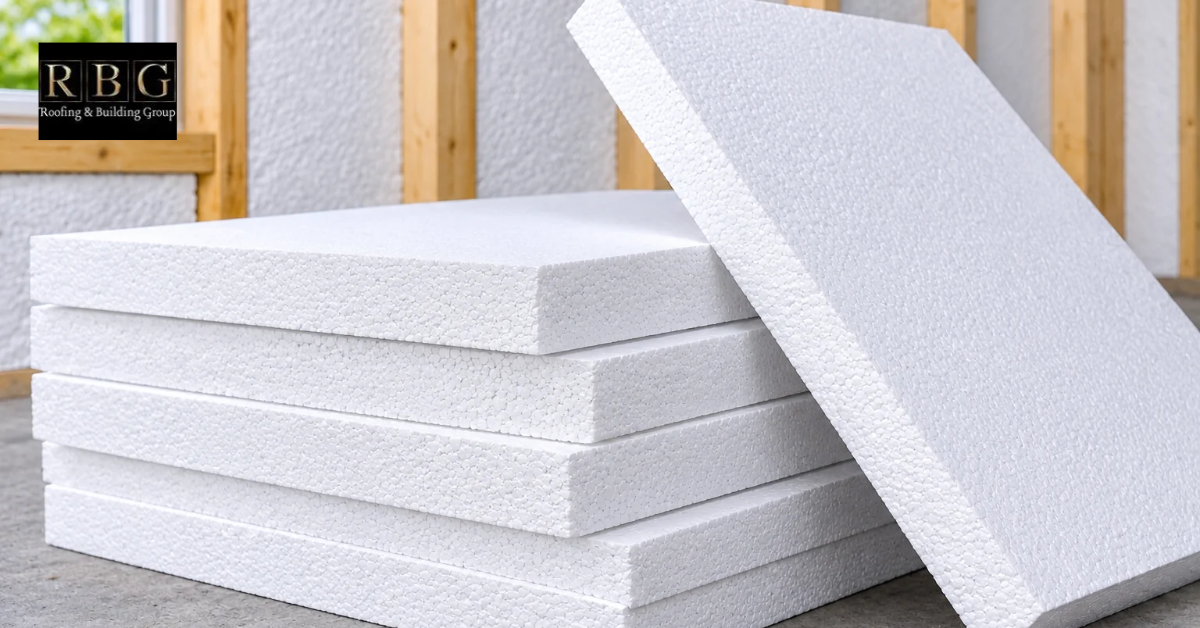
Pros:
- Cost-effective compared with other rigid boards
- Lightweight and easy to cut
- Available in different densities for different loads
- Does not rot or degrade when installed correctly
Cons:
- Thicker than PIR or phenolic for the same performance
- Absorbs more water than XPS, so it is less suited to wet positions
- Can be damaged by solvent-based adhesives and sealants
- Needs sealed joints and the right vapour control for the build-up
Best for: budget flat roofs and builds where extra thickness is not a problem.
XPS Boards
Extruded polystyrene (XPS) is denser than EPS and has a closed-cell structure that resists water and compression. That makes it the usual choice for inverted flat roofs, where the insulation sits on top of the waterproofing and may carry paving, ballast or a green roof.
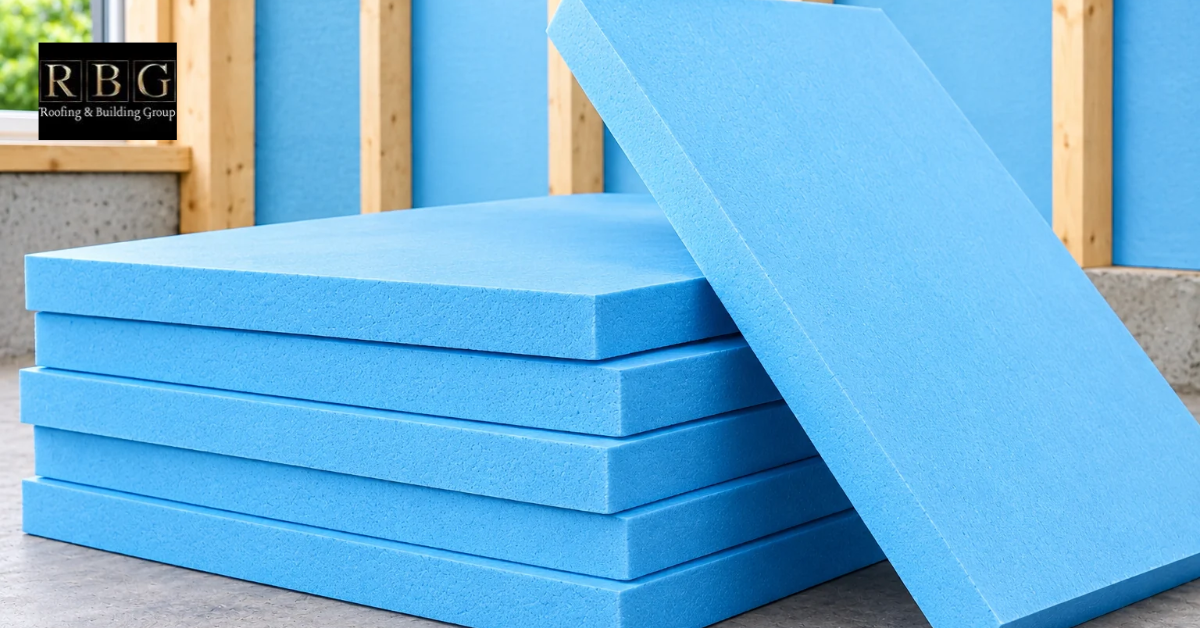
Pros:
- Resists water absorption, even in damp conditions
- High compressive strength, so it can carry paving, ballast or a green roof
- Durable and holds its performance over time
- Works above the waterproof layer, which protects the membrane
Cons:
- Costs more than EPS
- Needs more thickness than PIR or phenolic for the same performance
- Can be damaged by solvent-based adhesives
- Has a higher environmental impact than natural options
Best for: inverted flat roofs, green roofs, and roofs carrying ballast or paving.
Spray Foam
Spray foam is applied as a liquid that expands into a solid foam, usually to the underside of the roof covering between the rafters. As it expands, it seals gaps and cracks, making it good at reducing draughts and covering awkward shapes. There are two main types: open-cell, which is softer and more breathable, and closed-cell, which is denser and more rigid.
It does come with cautions in the UK. Foam applied against the back of tiles or slates can hide leaks, defects and timber decay, and it can make later roof repairs more difficult. Some mortgage lenders and surveyors are wary of it, so check before you commit if you plan to sell or remortgage, and make sure the installer is properly certified.
Pros:
- Seals gaps and reduces air leakage
- Fits awkward shapes and hard-to-reach areas
- Quick to apply once the installer is on site
- Closed-cell types give good performance in a thin layer
Cons:
- Can hide leaks, defects and timber decay behind the foam
- Makes later roof repairs and re-roofing more difficult
- Some lenders and surveyors are cautious about it
- Needs a specialist installer and is hard to remove
Best for: awkward shapes at rafter level, where the installer is certified, and you have checked for lender concerns.
Natural Insulation: Sheep’s Wool, Wood Fibre and Cellulose
Natural insulation is made from renewable or recycled materials. Sheep’s wool comes in rolls and batts and is fitted much like mineral wool. Wood fibre is available as rigid or semi-rigid boards, and it adds thermal mass, which helps reduce overheating in loft rooms during summer. Cellulose is made from recycled paper and is blown into lofts or packed between rafters.
These products are breathable and handle moisture well, which suits older buildings and breathable roof build-ups. The trade-offs are a higher price and the need for more thickness to reach the same performance.
Pros:
- Made from renewable or recycled materials
- Breathable and good at handling moisture
- Wood fibre adds thermal mass, reducing summer overheating
- Often more pleasant to handle than mineral wool
Cons:
- Higher cost than mineral wool
- Needs more thickness to match rigid boards
- Less widely stocked, so lead times can be longer
- May need treatment against pests, moisture or fire, so check the product certification
Best for: eco-friendly lofts and rafter builds, and breathable roof constructions.
Multifoil and Reflective Insulation
Multifoil is made of thin layers of reflective foil separated by wadding or foam. It is slim and is often fitted under rafters, with an air gap on at least one side so the foil can reflect radiant heat. It can improve airtightness when the joints are taped, but its standalone insulation value is debated and depends heavily on the air gaps around it.
For that reason, it is usually combined with other insulation rather than used alone, so check the certification and U-value claims for your exact build-up.
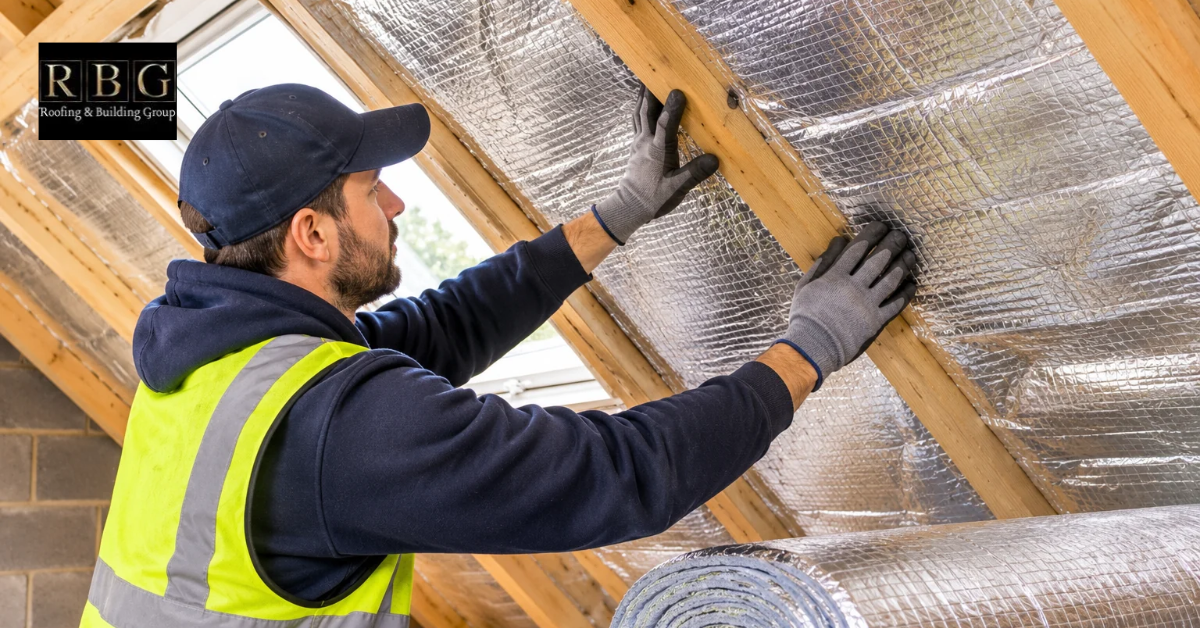
Pros:
- Very thin, so it adds little depth under rafters
- Lightweight and quick to fit
- Can improve airtightness when joints are taped
- Reflects radiant heat
Cons:
- Real-world performance depends heavily on air gaps and installation
- Manufacturer claims vary and are debated in the industry
- Usually needs to be combined with other insulation to meet requirements
- Joints must be carefully taped to work as an airtight layer
Best for: a thin supplementary layer under rafters, alongside other insulation.
How Much Roof Insulation Do You Need?
For an unused loft, the commonly recommended depth of mineral wool is around 270mm. For rafter-level or flat roof insulation, the thickness depends on the material, because performance is measured by U-value (the rate of heat passing through the roof; lower is better).
Approved Document L guidance for upgrading existing homes in England targets roughly 0.16 W/m²K for pitched roofs insulated at ceiling level, and roughly 0.18 W/m²K for pitched roofs insulated at rafter level and for flat roofs. Requirements are different in Wales and Scotland, and they change over time, so confirm the current rules with building control or your installer before you start.
Ventilation, Vapour Control and Condensation
Insulation without moisture control can create problems instead of solving them. Warm, damp air from kitchens and bathrooms rises into the roof, and if it meets cold surfaces, it condenses. These principles help prevent that:
- Keep cold roofs ventilated. Do not push insulation into the eaves where it blocks airflow. Use eaves vents or baffles to keep a clear path.
- Fit a vapor control layer on warm-roof and rafter-level builds. Install it on the warm side of the insulation, with all joints taped, to stop moist air from reaching cold timber.
- Use a breathable underlay. It lets moisture escape from the roof space.
- Deal with moisture at the source. Extractor fans in kitchens and bathrooms make a real difference.
If you already have damp patches or mould, find the cause before insulating over it. Our damp proofing service can help identify whether the problem is condensation, a leak or something else.
How to Choose the Right Roof Insulation
Work through these questions to narrow down the best option:
- What type of roof do you have? Pitched cold roofs suit mineral wool, while flat and rafter-level roofs usually need rigid boards.
- How much space is available? Where depth is limited, PIR or phenolic boards give more performance per millimetre.
- What is your budget? Mineral wool and EPS cost the least, while phenolic and natural products cost the most.
- Are you replacing the roof covering? If yes, above-rafter insulation becomes a practical and effective choice.
- How important are fire performance and sustainability? Rock wool and natural materials score well on these points.
Common Roof Insulation Mistakes
- Blocking the eaves ventilation, which traps moisture in a cold roof.
- Compressing the insulation, which reduces its performance.
- Leaving gaps at rafters, edges and joints, which let heat escape and moisture in.
- Skipping the vapour control layer where one is needed.
- Insulating over a leak or damp timber. Fix the cause first, and our guide on how to find a leak in your roof can help.
- Covering electrical cables and downlights without checking they are safe to be covered.
- Choosing on price alone, when the build-up, ventilation and installation quality matter just as much.
Can You Insulate a Roof Yourself?
Laying mineral wool across the joists of an accessible loft is a realistic DIY job, provided you protect yourself, avoid compressing the insulation, and keep the eaves clear. Insulating at rafter level, above the rafters or on a flat roof is different. It involves removing roof coverings, working at height, and getting the waterproofing and vapour control right, so it is better left to an experienced roofer.
Choosing the right insulation is only half the job, because it has to go onto a sound, watertight roof. RBG Roofing Ltd is a family-run roofing company that has served the Forest of Dean, Gloucester, Hereford, Chepstow, Abergavenny, and the surrounding areas since 1988. We are fully licensed and insured, offer free quotations with clear fixed prices, and guarantee all our work.
Whether you’re fitting a new roof, replacing a flat roof, or repairing an existing one, our team can advise on what will work best for your property. Ready to talk about your roof? Request a free quote, call us on 07304082599
FAQs
What is the best insulation for a roof?
It depends on the roof. Mineral wool is the best value for a standard loft, PIR or phenolic boards work best where space is limited, and XPS suits inverted flat roofs.
How thick should loft insulation be?
Around 270mm of mineral wool is the commonly recommended depth for an unused loft.
Do I need Building Regulations approval?
Often, yes, when you replace or substantially renovate a roof or convert a loft. Check with your local building control team before starting work.
Can roof insulation cause damp?
Not when it is installed correctly. Problems usually come from blocked ventilation, missing vapor control layers, or insulating over an existing leak.
