
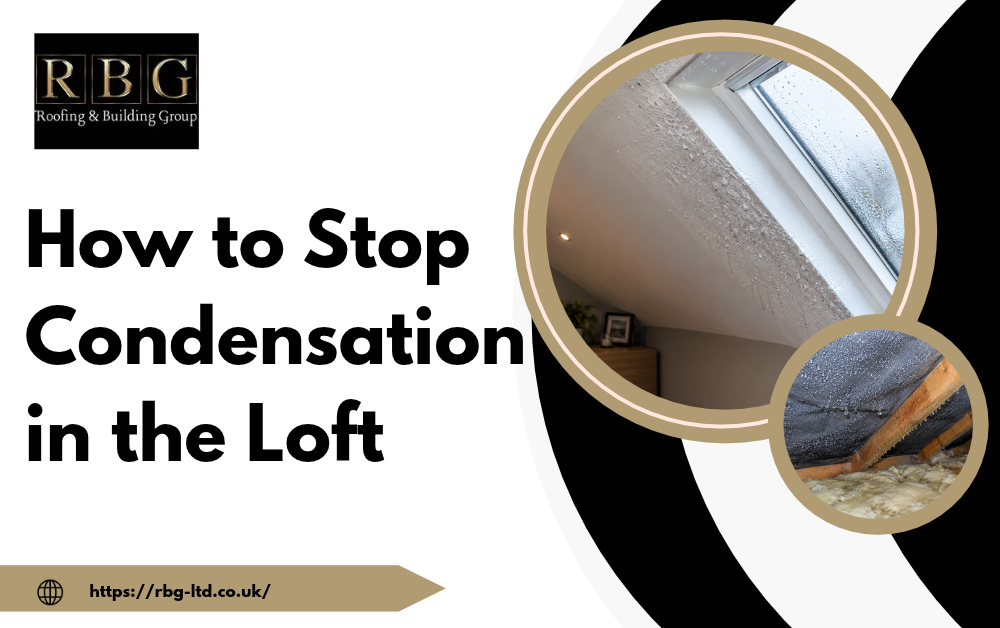
Wondering how to stop condensation in the loft? Do three things: reduce moisture entering the loft from your home, improve ventilation so damp air can escape, and keep the loft properly (and evenly) insulated so warm air doesn’t meet cold surfaces. In practice, that means sealing gaps around the loft hatch and light fittings, venting kitchen and bathroom extractors outside, fitting or clearing eaves and roof vents, and checking that insulation is installed correctly without blocking airflow. If the problem keeps returning, or you can see leaks, stained timber or mould, a professional roof inspection will find the underlying cause.
This guide covers everything you need to know about loft condensation: what it is, why it happens, the most common causes and warning signs, practical fixes, ways to prevent it from coming back, and when to call a professional roofer.
What Is Loft Condensation?
Every home produces moisture. Cooking, showering, drying clothes, and even breathing release water vapour into the air. Because warm air rises, much of that moisture drifts upwards and, if it finds a path, ends up in the loft.
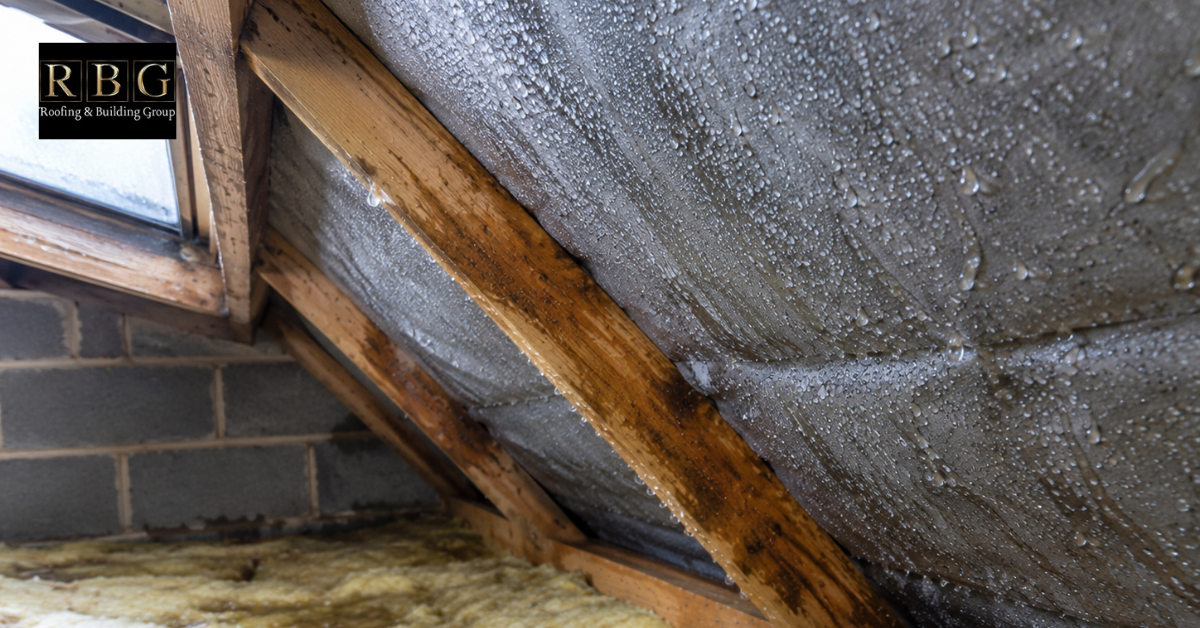
The loft is usually the coldest part of the house in winter. When warm, damp air meets the cold timbers and roofing underlay, it cools below its dew point and turns into water droplets. Over time, this leads to damp patches, dripping, mould and, in severe cases, rotting timbers and damaged insulation. It is most noticeable in autumn and winter, on cold mornings, and in homes that are well sealed but poorly ventilated.
Common Causes of Condensation in the Loft
1. Poor or Blocked Loft Ventilation
A cold loft needs a steady airflow to carry moisture out. If insulation blocks eaves vents, or there are no roof vents at all, damp air stays trapped and condenses. This is one of the most common causes.
2. Warm, Moist Air Leaking Up From the House
Gaps around the loft hatch, recessed downlights, pipes, cables and ceiling fittings let humid air escape into the roof space. Even small gaps add up over a whole winter.
3. Extractor Fans Venting Into the Loft
Bathroom and kitchen extractors that discharge into the loft, rather than outside, pump large amounts of moisture directly into the space. This is a very common DIY or older-installation mistake.
4. Insufficient or Badly Installed Insulation
Gaps, thin sections or compressed insulation create cold spots. At the same time, over-stuffed insulation pushed into the eaves can block ventilation. Both problems encourage condensation.
5. High Household Humidity
Drying clothes indoors, unvented tumble dryers, cooking without extraction, and poor heating patterns all raise indoor humidity. The more moisture in the home, the more reaches the loft.
6. Non-Breathable Roofing Felt
Older bitumen felt does not let vapour pass through, so moisture condenses on its underside and drips. Breathable membranes reduce this, but only when the loft is also properly ventilated.
7. Loft Conversions and Stored Items
Boarding over insulation, storing boxes tightly against the eaves, or partially converting a loft can restrict airflow and trap damp air.
8. Roof Leaks Mistaken for Condensation
Sometimes what looks like condensation is actually a leak from cracked tiles, failed flashing, a damaged chimney, or blocked guttering. The two can occur together, so it is worth getting the roof checked.
How to Stop Condensation in the Loft: Step-by-Step
Improve Loft Ventilation
Good airflow is the single most effective fix for loft condensation. A cold loft needs air to enter at the lowest part of the roof and leave at the highest, so damp air is carried outside before it has time to condense on cold timbers and felt. Cross-ventilation like this works best, and it can be achieved with a mix of the following:
- Eaves vents or soffit vents: let fresh air in at the lowest part of the roof
- Ridge or tile vents: allow damp air to leave at the highest point
- Gable vents: create cross-flow on some roof types
- Eaves trays (rafter trays): keep insulation back from the eaves so the air path stays clear
As a general guide for pitched roofs, a continuous gap of around 10mm to 25mm along the eaves is commonly recommended. The correct provision depends on your roof design, so it is worth having it checked if you are unsure.
Seal Air Leaks From the House Into the Loft
Ventilation helps moisture escape, but the best approach is to stop as much of it as possible from reaching the loft in the first place. Start with a well-sealed, insulated loft hatch fitted with draught seals, because a loose hatch is one of the easiest routes for warm, damp air. Then seal gaps around pipes, cables and light fittings, and fill any gaps where internal walls meet the ceiling. For recessed downlights, use fire-rated hoods where appropriate to keep the ceiling airtight without creating a safety risk.
Redirect Extractor Fans Outside
Bathroom and kitchen extractor fans remove a lot of moisture, but only if they vent it outside. If a duct ends in the loft, it releases that damp air straight into the roof space, making condensation much worse. Make sure every extractor duct vents to the outside through a wall or roof outlet. Insulated ducting is also worth using, because it stops moisture from condensing inside the pipe and running back down towards the fan.
Correct or Upgrade Insulation
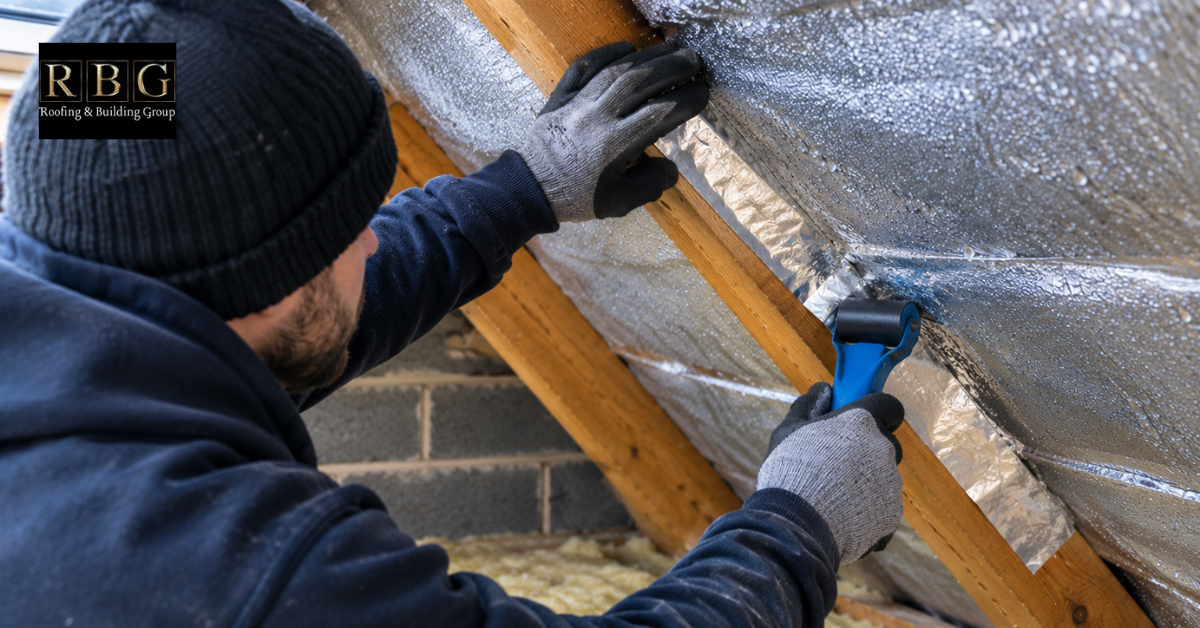
Good insulation keeps the loft cold and the house warm, so warm air does not reach cold surfaces and condense. A depth of around 270mm of mineral wool is commonly recommended in the UK for lofts. Check for gaps or compressed areas, as these create cold spots where condensation forms. Make sure insulation isn’t pushed into the eaves, where it can block ventilation, and that water tanks and pipes are insulated and properly covered.
Reduce Moisture Inside the Home
The less moisture your home produces, the less will reach the loft. A few simple daily habits can make a real difference, especially in winter when windows stay closed:
- Use extractor fans when cooking and showering, and leave them running for a while afterwards
- Dry clothes outdoors or in a ventilated room, and vent tumble dryers outside
- Keep consistent background heating so rooms don’t swing between cold and damp
A dehumidifier can also help in rooms that stay damp. It works best alongside the other fixes, not as a replacement.
Replace Old Roofing Felt With a Breathable Membrane
Older bitumen felt does not let vapour pass through, so moisture can collect on its underside and drip onto timbers and insulation. A modern breathable membrane lets vapour escape while still keeping rain out, which greatly reduces this problem. You usually replace it as part of a re-roof or major repair, since you need to lift the tiles or slates. Even with a breathable membrane, the loft still needs proper ventilation to work as intended.
Treat Mould and Replace Damaged Insulation
Once you’ve fixed the moisture source, you need to deal with the damage it left behind. Clean affected timbers with a suitable fungicidal treatment, and replace any insulation that is soaked, flattened or mouldy, because it no longer works properly. Treating mould without fixing the moisture source is only a temporary solution, as it will return next winter.
Repair Roof, Flashing and Gutter Defects
Not all damp loft issues come from condensation. Cracked tiles, slipped slates, failed flashing, damaged chimneys, and blocked or leaking gutters can let rainwater in, and they often look like condensation. A professional roof inspection can tell you whether you have condensation, a leak, or both, so you fix the right problem the first time.
Signs You Have Condensation in Your Loft
If you notice even one of these signs, call an experienced roofing contractor as soon as possible to prevent the damage from spreading.
How to Prevent Loft Condensation in the Future
Prevention is cheaper and easier than repairing damaged timber. Build these habits into your yearly routine:
- Check your loft twice a year: once before winter and once in spring, looking for damp, mould, and blocked vents
- Keep vents clear: never push insulation or stored items against the eaves
- Use extraction properly: run fans for the full time needed
- Keep the roof in good repair: fix slipped tiles and leaks promptly
- Avoid overloading the loft: leave space for air to circulate
- Monitor humidity: a cheap hygrometer helps you spot when indoor air is too damp
When to Call a Professional Roofer
Some fixes are simple DIY jobs. Call a professional roofer if:
- You are unsure whether the problem is condensation or a roof leak
- Ventilation needs to be added to the roof structure
- Your felt is old and failing
- Condensation keeps returning despite your efforts
Working in a loft or at height carries risk. A qualified roofer can inspect safely, diagnose the true cause, and fix it properly the first time. If condensation has already caused damp, mould, or timber damage, RBG Roofing Ltd can help. As a reliable roofing contractor, we provide professional damp-proofing services in Forest of Dean to protect your property from moisture and water damage, and we have served the Forest of Dean and nearby areas since 1988. We also handle roof leak repairs, flat roofing, chimney repairs, and uPVC fascia and guttering, so we can fix both the cause and the damp they leave behind. You get honest advice, a fixed-price quote, no callout charge and fully guaranteed work.
Dealing with damp or loft condensation? Get a free, no-obligation quote from our expert team today.
FAQs
How do I tell the difference between condensation and a roof leak?
Condensation usually appears as widespread dampness or droplets across the underside of the roof, often worse on cold mornings. Leaks tend to be localised, with staining or dripping in a specific spot, often after rain.
Does loft insulation cause condensation?
Good insulation does not cause condensation. Badly installed insulation can, particularly if it blocks eaves ventilation or leaves gaps that create cold spots.
Should I put a dehumidifier in my loft?
A dehumidifier may help temporarily, but it does not fix the cause. It is better to improve ventilation, seal air leaks, and reduce indoor moisture.
When is condensation worst in a loft?
It is typically worse from autumn to early spring, when temperatures are low, and homes are heated, sealed up and used more intensively.
How much does it cost to fix loft condensation?
Costs vary depending on the cause and the work needed, from small ventilation upgrades to larger repairs.
