
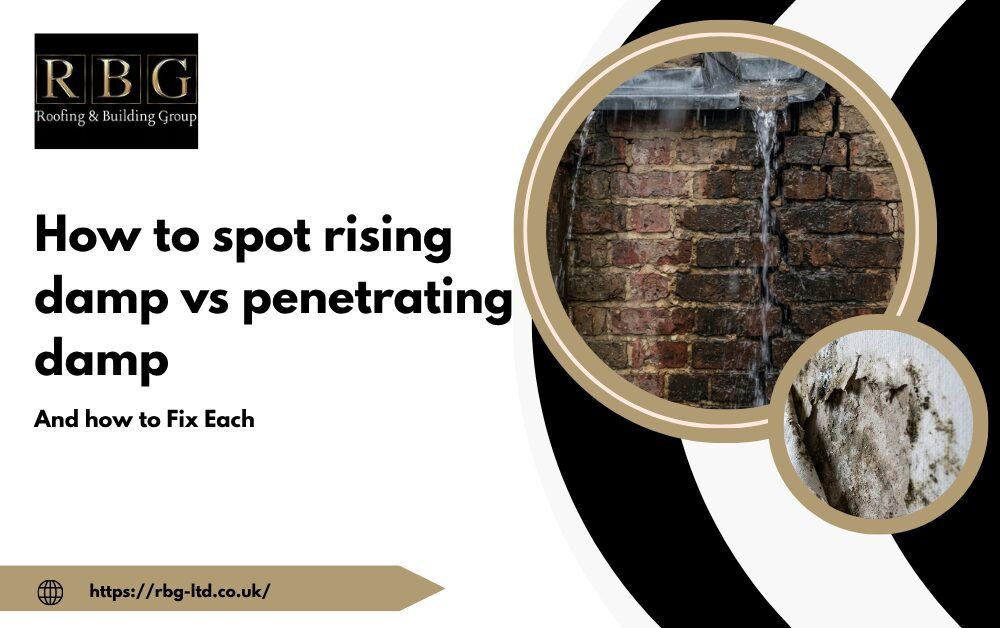
A damp patch creeping across your wall is more than just an eyesore; it’s a warning sign. Left unaddressed, damp is one of the most common problems homeowners face, capable of damaging plaster, ruining paintwork, weakening structural timber, and even impacting the health of those living in the home through mould growth and poor air quality.
Damp isn’t a single problem; it’s two very different ones wearing the same disguise. Rising damp and penetrating damp can look almost identical at first glance, yet they stem from entirely different causes and demand entirely different solutions, often requiring a damp proofing specialist to properly diagnose which one you’re dealing with.
In this guide, we’ll walk you through exactly how to spot rising damp vs penetrating damp, how to fix each one the right way, their costs, prevention tips, and when to call a professional.
What Is Rising Damp?
Rising damp occurs when moisture from the ground is drawn upward through a wall or floor by capillary action, much like how a paper towel soaks up water. It typically affects the lower sections of a building, rising no higher than about 1 meter above the ground.
This problem is most common in older properties that either never had a damp-proof course (DPC) installed, or in which the existing DPC has failed or been bridged, allowing moisture to bypass it and reach the wall above. Common causes include a missing or deteriorated DPC, bridging caused by raised external ground levels, old solid brick walls with no damp barrier, and blocked or damaged sub-floor ventilation.
What Is Penetrating Damp?
Penetrating damp is caused by water entering a building horizontally from an external source, such as rain (especially common during UK winters), a leaking pipe, or a structural defect, rather than rising up from the ground. Unlike rising damp, it can appear at any height in a building, whether on the ground floor, upper floors, or even in the roof space.
This type of damp is usually tied to a specific defect somewhere in the building’s exterior. Common causes include cracked or damaged render and brickwork, faulty or missing roof tiles and flashing, blocked or leaking gutters and downpipes, deteriorated pointing, leaking pipes hidden within walls, and poorly sealed windows or doors. Once the entry point is found and sealed, the problem typically stops.
How to Spot Rising Damp: Key Warning Signs
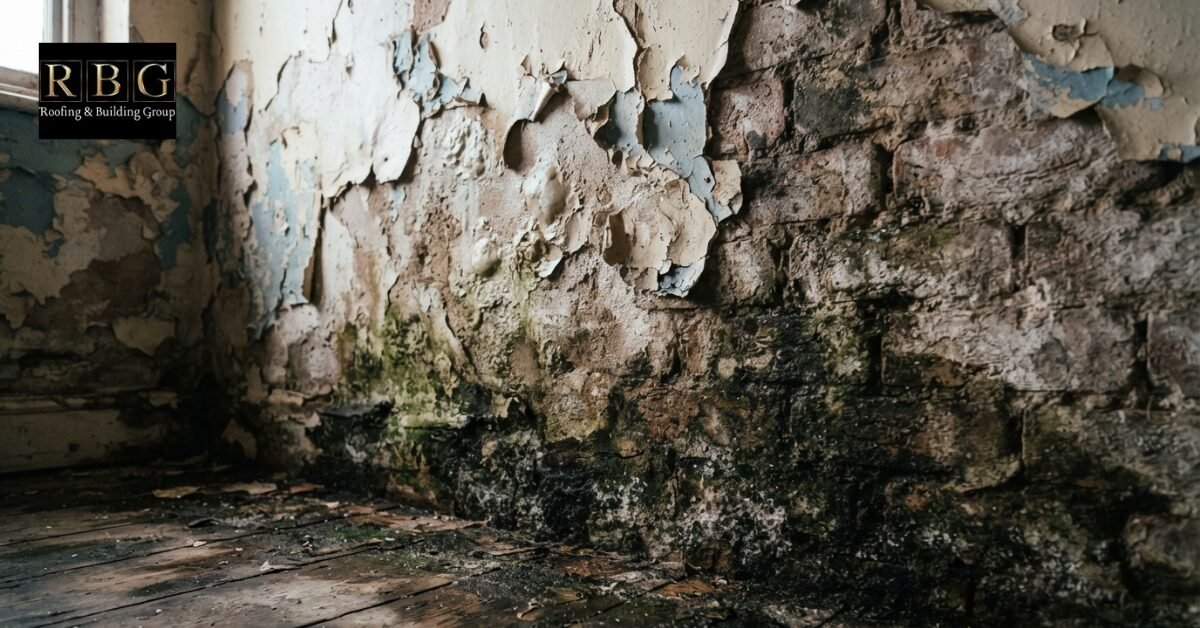
The clearest giveaway of rising damp is that it never appears above roughly 1 m from the floor and is exclusive to ground-floor walls, since it originates from moisture in the ground itself. Common signs include:
- A horizontal tide mark band of staining near the floor
- Peeling paint or wallpaper near skirting boards
- Crumbling or blown plaster that feels soft or hollow when tapped
- White, powdery salt deposits (efflorescence)
- A musty smell concentrated at floor level
How to Fix Rising Damp: Step by Step
To fix rising damp, you need to follow these steps:
Step 1: Install or Repair the Damp-Proof Course
The damp-proof course (DPC) stops ground moisture from rising into walls, so this is usually the first fix needed. Chemical DPC injection is the most common method, where a water-repellent fluid is injected into the mortar line to create a moisture barrier. In more severe cases, a physical DPC membrane may be inserted instead. The right choice depends on wall type and severity, which is best assessed by a professional.
Step 2: Remove Bridging Issues
A good DPC won’t work if something bridges it. This usually means lowering external ground levels, paths, or flower beds that sit above the DPC line, and clearing away render, soil, or debris resting against the base of the wall.
Step 3: Replaster with Salt-Resistant Materials
Rising damp leaves behind salts in the plaster that continue to attract moisture even after the wall dries. The affected plaster is removed and replaced with a specialist salt-resistant render, which is then left to dry fully before redecorating.
Step 4: Improve Sub-Floor Ventilation
Blocked or insufficient air bricks trap moisture beneath suspended floors. Clearing or adding air bricks improves airflow and helps prevent the problem from recurring.
How to Spot Penetrating Damp: Key Warning Signs
Penetrating damp behaves differently. It doesn’t follow a neat pattern and can show up almost anywhere, depending on where the water is getting in. Watch for:
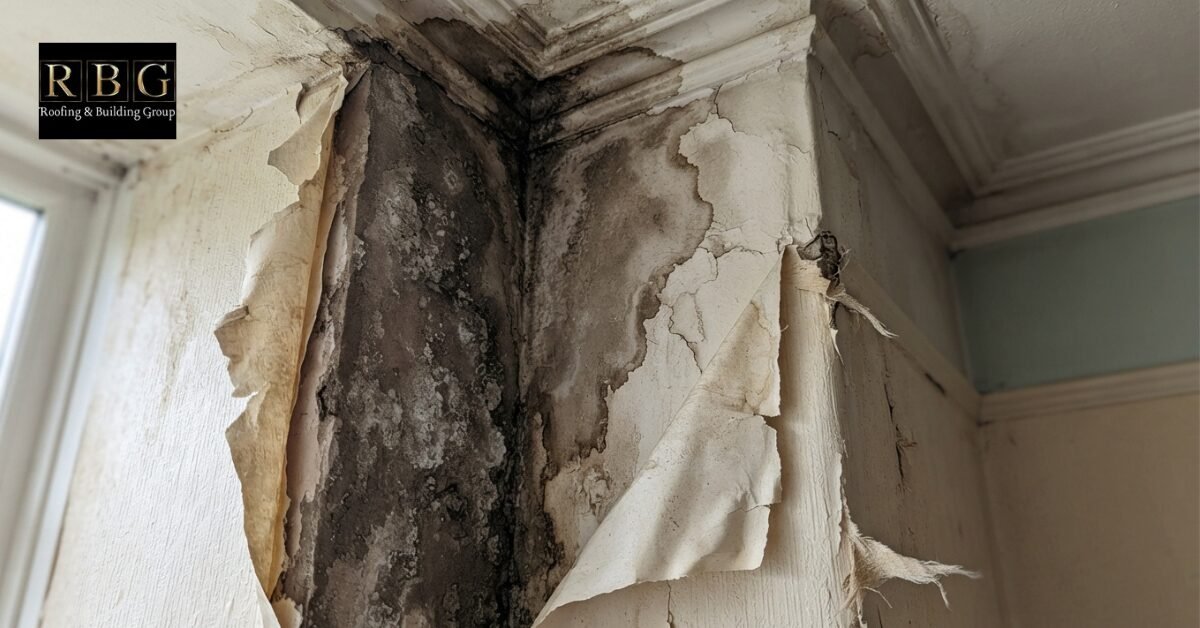
- Damp patches at any height, especially near rooflines, chimney breasts, or windows
- Irregular, well-defined patches rather than an even band
- Patches that worsen noticeably after rain
- Visible external damage, such as cracked render, missing tiles, or blocked gutters, that lines up with the indoor patch
- Mould growth concentrated in one specific spot rather than spreading evenly
How to Fix Penetrating Damp: Step by Step
To fix Penetrating damp, you need to follow these steps:
Step 1: Inspect and Identify the Source
Since penetrating damp usually originates from a single external defect, the first step is to trace the damp patch back to its point of entry by checking the roof, walls, windows, and nearby pipework.
Step 2: Repair the Roof
This typically involves replacing damaged tiles and repairing faulty flashing around chimneys and joints, which are common weak points for water entry.
Step 3: Clear and Repair Guttering
Blocked or damaged gutters often cause water to overflow down walls. Clearing debris and repairing or replacing damaged sections usually resolves this.
Step 4: Repoint and Repair Brickwork
Worn mortar joints and cracked render let water soak into the wall. Repointing and sealing cracks restores the wall’s protection.
Step 5: Reseal Windows and Doors
Worn seals around frames are a common entry point. Resealing and ensuring sills slope away from the wall helps keep water out.
Step 6: Apply a Breathable Waterproof Coating
As an extra layer of protection, a breathable masonry sealant can be applied to repel rain while still allowing the wall to release trapped moisture.
What Does Damp Repair Actually Cost?
The cost of fixing damp varies widely depending on the cause, severity, and extent of the damage. Chemical DPC injection is typically priced per linear meter, so the total cost depends on the length of wall to be treated. Re-rendering or replastering scales with the size of the affected area, while roof repairs can range from a simple tile replacement to a full flashing overhaul. Guttering repair and cleaning, on the other hand, is often among the most affordable fixes, yet it’s frequently overlooked despite being a common cause of penetrating damp.
A few key factors tend to drive the overall cost up or down:
- Severity of the damage: early-stage damp is cheaper to fix than long-neglected damage
- Size of the affected area: larger patches naturally mean more material and labor
- Accessibility: roof work often costs more due to the need for scaffolding or ladders
Since prices vary by region and contractor, it’s always best to get a few local quotes for an accurate estimate. For a detailed breakdown by house size and DPC type, check out our full guide on how much a damp course costs.
Damp Prevention Tips for the Long Term
Preventing damp long-term really comes down to regular maintenance. A few simple habits go a long way:
- Clean gutters and downpipes at least twice a year
- Inspect the roof regularly for loose or missing tiles
- Keep external ground levels below the DPC line
- Ensure good ventilation, both indoors and in sub-floor spaces
- Address small cracks in render or pointing before they worsen
- Schedule a professional damp inspection every few years, especially for older properties.
When to Call a Professional
Not every damp problem requires a professional, but some situations do. You should bring in an expert if:
- DIY fixes haven’t worked. If you’ve cleared gutters, resealed a window, or tried a patch repair and the damp is still there, something deeper is going on.
- The affected area is large. Extensive plaster damage, widespread staining, or damp spread across multiple walls is beyond a simple fix.
- There’s structural involvement. Sagging floors, rotting timber, or crumbling brickwork need proper assessment, not guesswork.
- The property has a history of damp. Older homes often have multiple contributing issues that are hard to untangle without experience.
Attempting repairs without properly resolving the root cause can make things worse over time, and may even affect your home insurance cover.
If you’d rather have an expert take a look, our trusted roofers in Forest of Dean have been providing damp proofing services for over 36 years.
Conclusion
Rising damp and penetrating damp may look similar on the surface, but understanding their differences is the key to fixing the problem correctly the first time. Rising damp comes from the ground and requires a proper damp-proof barrier, while penetrating damp comes from an external source and requires the entry point to be sealed or repaired.
If you’re dealing with a damp problem and aren’t sure which type you’re facing. Get in touch with us for honest advice and a no-obligation quote.
FAQs
Can rising damp go above one meter?
It’s rare. Rising damp is limited by capillary action and gravity, so heights beyond about one meter are usually a sign of another problem, such as penetrating damp or condensation.
Is penetrating damp covered by insurance?
Sometimes, if it’s caused by a sudden, identifiable event like storm damage. Gradual damage from long-term neglect, such as blocked gutters over the years, is often excluded. Always check your specific policy.
How long does it take to dry out a damp wall?
This varies, but after treatment, walls typically take several weeks to a few months to fully dry out, depending on wall thickness and material.
Can I fix damp myself?
Minor penetrating damp issues, like clearing gutters or resealing a window, can often be handled as DIY projects. Rising damp treatment, however, usually requires professional-grade tools and expertise for a lasting fix.
