
Your roof is one of the most important parts of your home. It protects your property from rain, wind, and harsh weather, while keeping your house insulated and safe. Damaged roof shingles can quickly lead to leaks and other problems if not fixed. Roof shingles are overlapping pieces made from materials like asphalt, wood, slate, metal, or composite. They cover your roof, keeping it strong and weather-resistant. Properly installed shingles help maintain your home’s structure and prevent water from getting inside.
Even though shingles are durable and can last 15 to 25 years, old age, storms, or poor installation can cause damage. Missing or broken shingles from roof wear can lead to serious issues, including water damage and costly repairs if left unattended. If only a few shingles are damaged, shingle repair or asphalt shingle roof repair can be done safely at home. For older roofs or widespread damage, a full shingle roof replacement may be necessary. As experienced roofers, we will tell you how to repair roof shingles step by step and give practical advice to help you repair your leaking roof.
Tools and Materials Needed for Shingle Roof Repair
Before starting any shingle repair, gather the right tools and materials. This makes fixing roof shingles safer, faster, and more effective.
Tools
- Hammer – to remove and secure shingles
- Flat Pry Bar – to lift damaged shingles carefully
- Utility Knife – to cut shingles to size
- Roofing Nails – to secure replacement shingles
- Caulking Gun – for applying roofing sealant
- Roofing Cement – to bond shingles and seal gaps
- Measuring Tape – for accurate shingle placement
- Ladder – to safely access the roof
- Safety Harness – for protection while working at height
Materials
- Replacement Shingles – match your existing roof
- Roofing Felt – if the underlay is damaged
- Roofing Sealant – to make repairs watertight
Step-by-Step: How to Repair Roof Shingles
Step 1: Inspect the Damaged Area
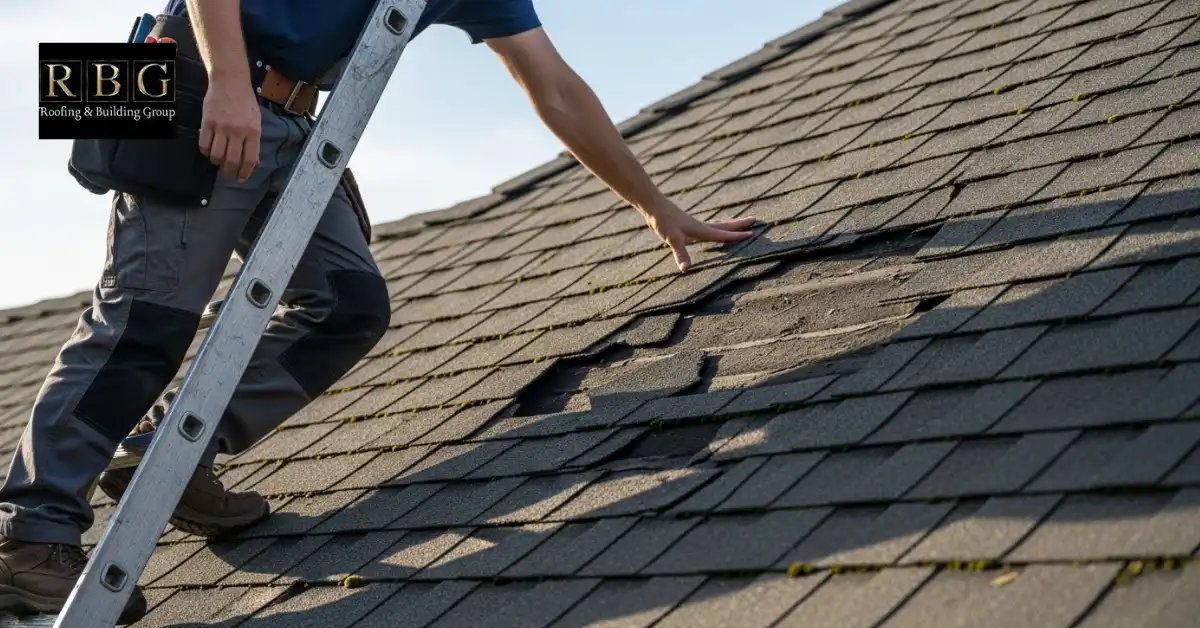
Start by checking your roof for cracked, curled, or missing shingles. Look closely for granules collecting in gutters or gaps between shingles, which are signs of wear and damage. Decide whether the issue can be handled with simple shingle repair or if a full shingle roof replacement is necessary.
Step 2: Remove the Damaged Shingles
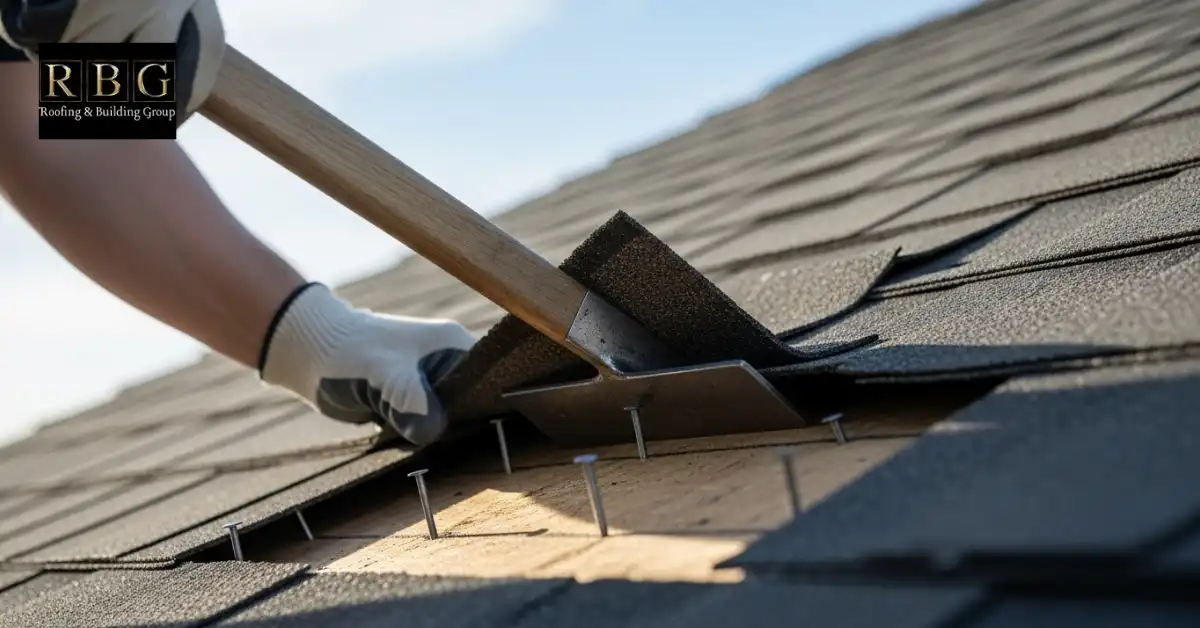
To remove damaged shingles, slide a flat pry bar under the shingle above the damaged one to loosen it. Carefully pry up the nails holding the damaged shingle in place and lift it away. Clear any debris or leftover nails from the area. For minor cracks, it may be possible to use roofing sealant instead of removing the shingle entirely, saving time and effort.
Step 3: Install the Replacement Shingle
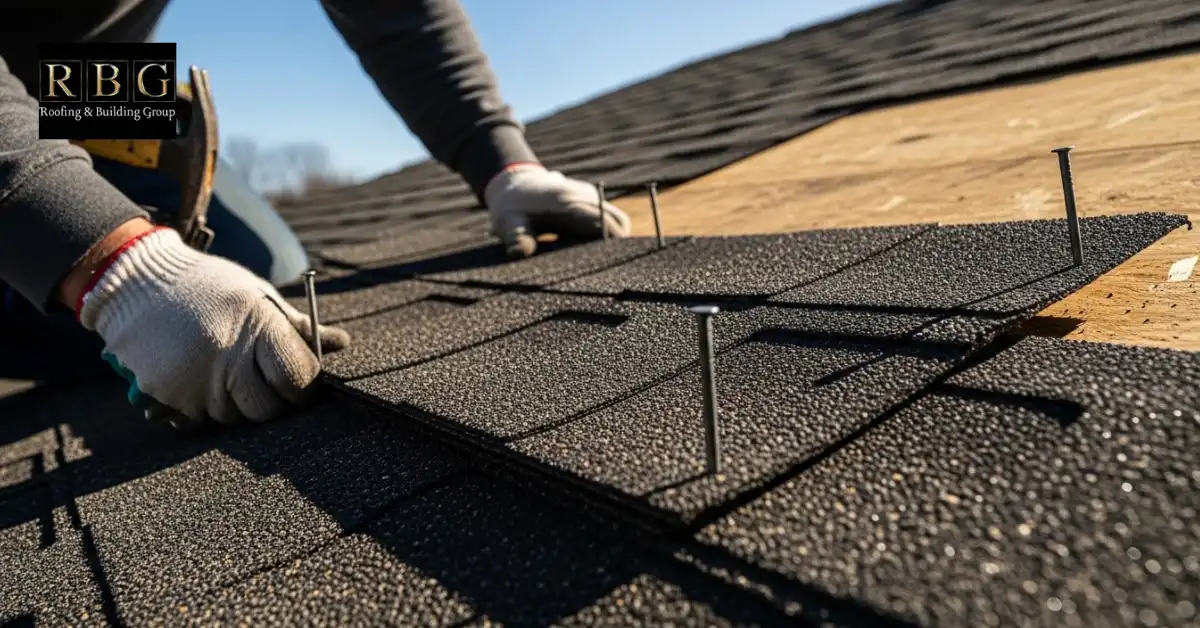
Measure the old shingle and cut the replacement to size if needed. Slide the new shingle into place, making sure it aligns with the surrounding shingles. Secure it with nails above the tab slots and at the corners. Always match the replacement shingles to the existing roof for a seamless look. This ensures your asphalt shingle roof repair or shingle roof repair blends in properly.
Step 4: Secure and Seal the Repair
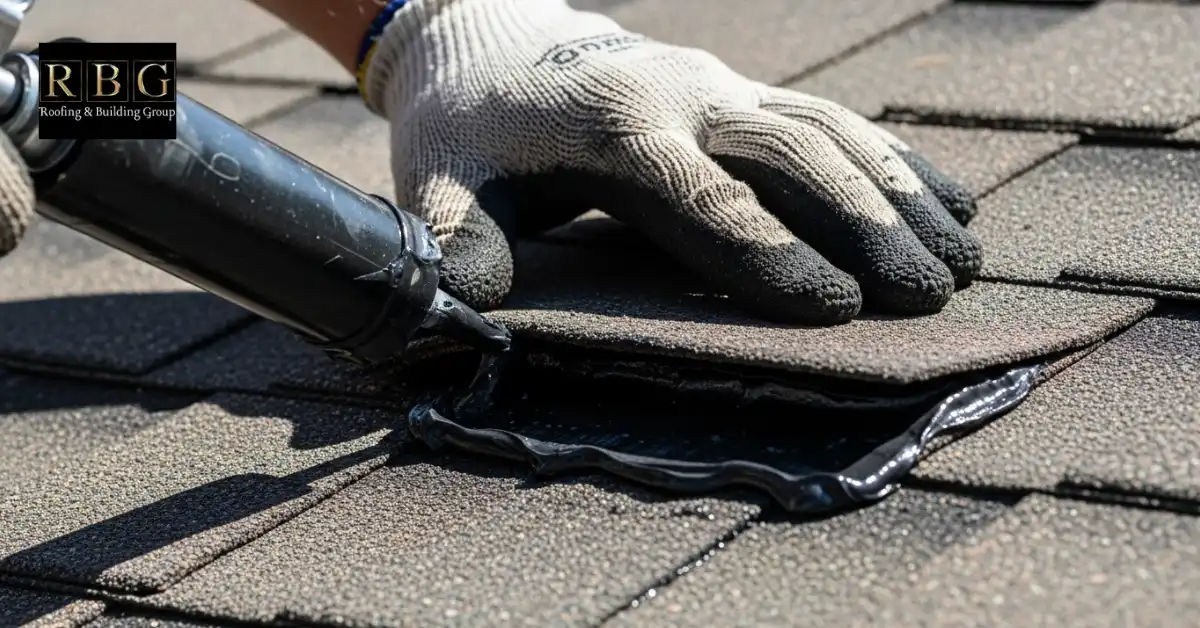
Apply roofing cement or sealant under the edges of the new shingle and over the nail heads. Press it down firmly to prevent wind uplift and ensure it adheres properly. Check the surrounding shingles and secure any that are loose. Allow the sealant to dry fully before exposing your roof to heavy weather. Minor cracks or small areas of damage can sometimes be fixed with sealant alone, reducing the need for full shingle replacement.
Common Mistakes to Avoid During Shingle Repair
When repairing roof shingles, avoiding common mistakes will save time and prevent further damage. Safety should always come first. Never attempt repairs without a ladder, safety harness, or proper footwear, as working at height can be dangerous. Incorrect nail placement is another frequent error. Nails should be placed correctly above the tab slots and corners of each shingle. Poorly nailed shingles can come loose, allowing wind or rain to lift them, which may require additional shingle repair later.
It’s also important not to work in poor weather. Wet or windy conditions make it harder to handle shingles safely and can reduce the quality of the repair. Waiting for dry, calm weather ensures the shingles adhere properly and last longer. Using mismatched shingles can affect both the appearance and performance of your roof. Always match replacement shingles to your existing roof. Finally, check for any underlying damage before starting. Ignoring hidden issues, like damaged underlay or rot, can lead to repeated roof shingles repair or more serious problems in the future.
When to Call a Professional
Minor shingle repair can often be done at home, but large areas of damage, structural issues, or hard-to-reach roofs should be handled by a professional. Safety risks and lack of experience are also good reasons to call a roofer.
Hiring a professional company ensures the quality of roofing service, and your roof repair is done correctly, which may be necessary for insurance claims. This prevents further damage and keeps your roof strong and weatherproof.
Conclusion
Repairing roof shingles promptly is essential to keep your home safe, dry, and well-insulated. Even small damage can lead to leaks and further issues if left unattended. Regular shingle roof repair helps maintain the integrity of your roof and prevents costly repairs later. By following the right steps, inspecting the damaged area, removing broken shingles, installing replacements, and sealing the repair, you can handle most minor issues yourself.
Using the proper tools and materials ensures your repairs last longer and protects your home from the elements. Always remember that some situations require professional help. Experts should repair large-scale damage, structural problems, or tricky roofs to avoid safety risks. Whether DIY or professional, acting quickly will keep your roof shingles repair effective and your home protected.
FAQ’s
Can you repair roof shingles without replacing them?
Yes. Small cracks, lifted edges, or minor damage can often be fixed with roofing sealant. Full replacement is only needed for badly damaged or missing shingles. Proper repair keeps your roof safe and prevents leaks.
How long does asphalt shingle roof repair last?
A well-done repair can last several years, depending on the roof’s age, weather conditions, and the quality of the materials used. Minor fixes may last 3–5 years, while new shingles or proper repairs can last much longer. Regular maintenance helps extend lifespan.
When is shingle roof replacement necessary?
If shingles are old, widely damaged, curling, or missing, a full shingle roof replacement may be needed. Roofs over 20 years old or with structural damage often require replacement to prevent leaks and protect the home.
How quickly should roof shingles repair be done?
Repairs should be done as soon as damage is noticed. Waiting allows water and weather to worsen the problem, which can lead to leaks, rot, or higher costs. Acting quickly keeps your roof strong and your home safe.
