
Flat roofs are a popular choice for homes and commercial buildings in the UK. They are simple in design, cost-effective, and low-maintenance. Knowing how to install a flat roof properly is key to a durable, leak-proof result. Whether you’re building a flat roof from scratch or replacing an old one, preparation is everything. From checking the roof structure to choosing the right materials, every step in flat roof construction matters for a strong finish.
With the right guidance, laying a flat roof or installing flat roofingdoesn’t have to be complicated. Even DIY-enthusiasts can follow the steps safely and achieve excellent results. A well-installed flat roof not only protects your home but also offers opportunities for additional features. You could use it for a small rooftop garden, extra storage, or install solar panels. Following this guide, you’ll learn everything you need for a successful flat roof installation.
Flat Roof Construction Methods
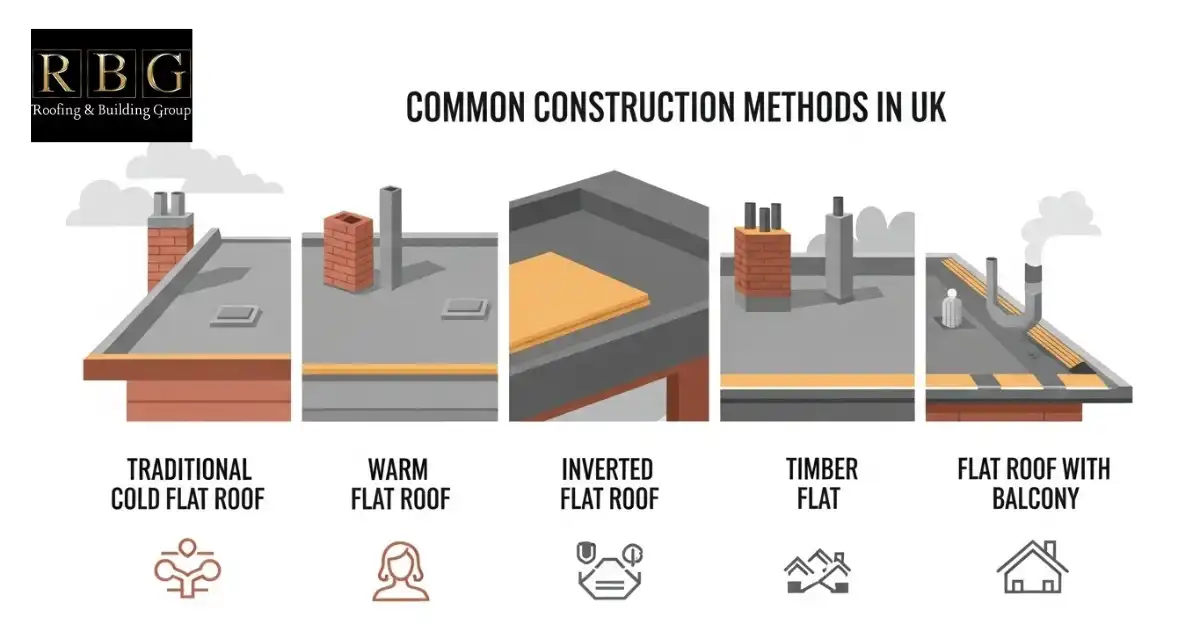
There are several ways to approach flat roof construction depending on your needs, building type, and materials. Understanding the different methods helps you choose the best solution for your home or commercial property.
- Traditional cold flat roof construction is the classic method. It uses a timber deck with insulation placed below the waterproofing layer. This approach is simple and cost-effective, but requires careful attention to prevent condensation.
- Warm flat roof construction places insulation above the roof deck and below the felt or membrane. This keeps the roof structure warmer, improves energy efficiency, and reduces the risk of damp. Many modern UK homes use this method for long-lasting results.
- Inverted flat roof construction is less common but highly effective. The insulation sits above the waterproof membrane, often covered with gravel or paving slabs. This design protects the membrane from temperature changes and physical damage.
- Timber flat roof construction is often used for sheds, garages, or small extensions. A timber framework is strong, lightweight, and easy to work with, making flat roof installation more straightforward for smaller projects.
For homes with extra space requirements, a flat roof with a balcony can be built. It combines waterproofing, insulation, and a sturdy deck to create a safe, usable outdoor area.
Finally, understanding the flat roof construction detail—from deck materials to insulation and waterproof layers is essential for a secure, durable roof. Every layer plays a role in protecting your property and ensuring long-term performance.
Installing a Flat Roof (Step-by-Step)
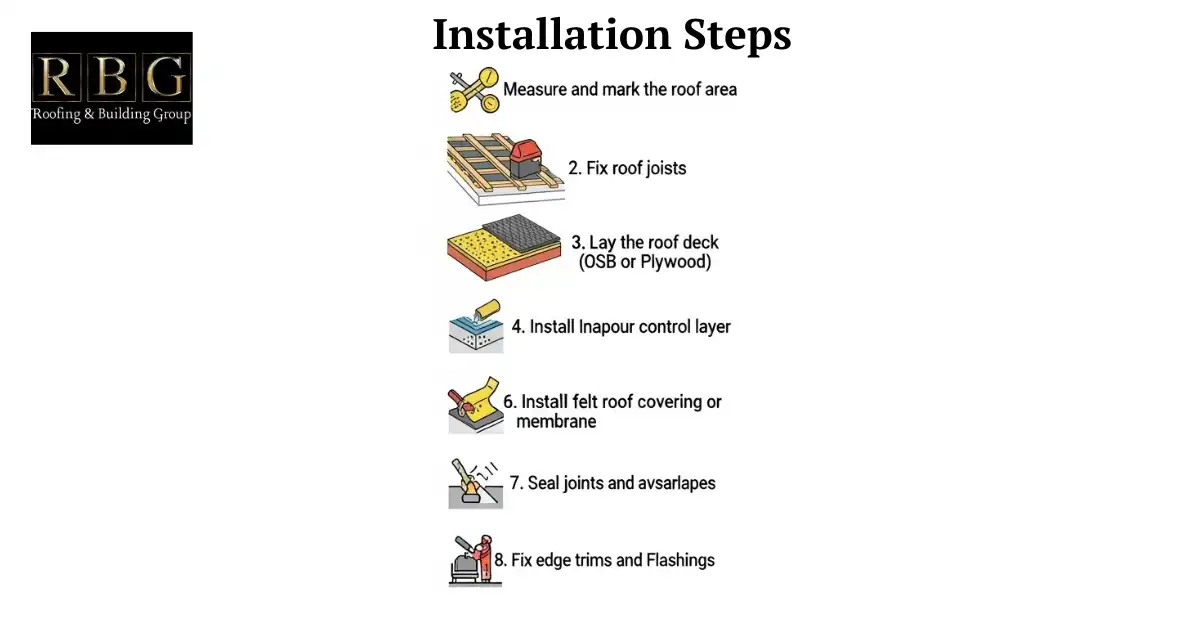
Installing a flat roof requires careful preparation and attention to detail. Follow these steps to ensure a durable and leak-proof roof:
- Measure and mark the roof area – Check that the roof structure is level and strong enough for flat roof construction.
- Fix roof joists and lay the roof deck – Use OSB or plywood for the base. Proper fixing is essential for flat roofing installation.
- Install insulation boards – Place them carefully to improve energy efficiency and maintain the flat roof’s structural details.
- Lay the vapour control layer – prevents damp from entering the roof structure and supports a warm, flat roof.
- Install felt roof covering or membrane – Lay it carefully and ensure overlaps are sealed properly.
- Seal joints and overlaps – Check that every seam is tight to avoid leaks.
- Fix edge trims and flashings – Protects edges and corners from water damage.
- Check roof falls and drainage – Ensure water flows correctly to prevent pooling and extend the roof’s life.
Following these steps will help you complete a professional-quality flat roof installation that lasts for years.
Tips to Avoid Common Flat Roofing Mistakes
To make sure your flat roof installation lasts longer and stays leak-free, follow these tips:
- Ensure proper falls – A flat roof isn’t completely flat. A correct slope prevents water pooling and damage.
- Seal all joints and overlaps correctly – Poor sealing can lead to leaks and shorten the roof’s lifespan.
- Use the right insulation and vapour control – Skipping these layers can cause damp and reduce energy efficiency.
- Choose quality roofing materials – Using low-grade felt or membrane affects durability and performance.
- Install edge trims and flashings properly – Protects corners and edges from water ingress.
- Check drainage regularly – Ensure drains and outlets are clear to avoid standing water.
- Avoid working in wet weather – Installing roofing when wet can lead to mistakes and weak seals.
Following these simple tips will help you complete a flat roof installation safely and effectively prevent structural damage.
If you don’t feel confident tackling a flat roof install yourself, or if the work seems too risky, it’s best to contact local professionals. Experienced roofers can ensure your flat roof installation is safe, durable, and done right the first time.
Conclusion
Installing a flat roof doesn’t have to be complicated. By following the correct flat roof construction methods and flat roofing installation steps, you can create a durable, leak-proof roof that protects your home for years. Proper preparation, insulation, and careful laying of a flat roof are key to long-lasting results.
Even if you are confident in DIY, paying attention to details like flat roof structure detail, sealing joints, and checking drainage can make all the difference. A well-installed flat roof also offers opportunities for additional features, such as rooftop gardens or solar panels, without compromising safety.
If the process feels overwhelming or risky, don’t hesitate to call in professionals. Local roofers can complete your flat roof install safely and efficiently, giving you peace of mind and a roof that lasts.
FAQ’s
Can a flat roof be converted into a green roof in the UK?
Yes, a flat roof can support a lightweight green roof. Proper waterproofing, drainage, and root barriers are essential. This allows small rooftop gardens without damaging the roof structure or insulation.
How often should a flat roof be inspected for damage?
Inspect a flat roof at least twice a year and after heavy storms. Check for leaks, ponding water, cracks, or blistering. Early detection helps prevent costly repairs and extends the roof’s lifespan.
Can I walk on my flat roof safely?
Walking on a flat roof is possible if it is structurally sound. Avoid heavy loads and distribute the weight evenly across joists. Proper footwear and caution are essential to prevent damage or accidents.
What’s the difference between felt and rubber flat roofs?
Felt roofs use bitumen layers, are affordable, and common in UK homes. EPDM Rubber roofs are flexible, durable, and low-maintenance. Both provide waterproofing, but rubber offers longer life and better resistance to weather changes.
