
A conservatory is a beautiful addition to your home, offering a cosy space where you can enjoy natural sunlight, even on chilly days. However, as with any part of your property, issues can arise, and one common problem is a leaking conservatory roof. It’s crucial to address these leaks promptly to avoid further damage to your home and belongings.
When your conservatory roof starts to leak, it’s essential to take action promptly. Leaks, even small ones, can cause significant damage over time. They can lead to issues such as mold growth, structural problems, and damage to furniture or flooring. Whether worn sealants cause it, blocked gutters, or cracked roof panels, understanding the source of the leak will help you decide the best course of action.
Fixing a leaking conservatory roof is not only about protecting your home but also maintaining its comfort, energy efficiency, and overall value. When choosing roofers for your home, you can always trust experts who offer thorough inspections and repairs.
Common Reasons for Leaking Conservatory Roof
A leaking conservatory roof can stem from several causes, each requiring attention to prevent further damage. Understanding the root of the problem is essential for an effective repair, whether it is due to wear and tear or an installation issue. Here are the most common reasons for leaks:
1. Damaged or Worn Sealants
As your conservatory ages, the sealants around the roof joints naturally deteriorate. Over time, exposure to harsh weather conditions, such as rain and sunlight, causes these seals to crack or break down, allowing water to seep through. It’s essential to replace these seals regularly to prevent leaks, particularly after heavy rainfall.
2. Blocked Gutters or Downpipes
Another common issue is blocked gutters or downpipes. When gutters fill up with leaves, dirt, or debris, water has nowhere to go. This excess moisture can overflow, causing it to seep into the conservatory roof and result in leaks. Regular cleaning and maintenance of gutters and downpipes can help prevent this problem.
3. Cracked or Slipped Roof Panels
Your conservatory roof panels, whether made of glass or polycarbonate, are susceptible to shifting, cracking, or slipping. Strong winds, impacts from debris, or poor installation can cause these panels to misalign, leaving gaps where water can penetrate. This is especially common in older conservatories where the materials may have worn down over time.
4. Faulty Flashing
Flashing is used to seal the connection between your conservatory roof and the main building. If this flashing is damaged, poorly installed, or has worn out, it can cause water to leak into the conservatory. Checking the flashing and ensuring it’s securely fixed can prevent such leaks.
5. Worn Roof Vents
Roof vents are essential for air circulation, but if they become worn or improperly sealed, they can also contribute to leaks. Over time, seals on roof vents may degrade, allowing water to enter your conservatory, especially during heavy storms. Regular inspection of the roof ventilation system is crucial for ensuring it remains effective.
How to Fix a Leaking Conservatory Roof
Fixing a leaking conservatory roof doesn’t always require professional help, and many homeowners can handle the task themselves. With the right tools and a bit of patience, you can find leaks and restore your roof to its best condition. Here’s a step-by-step guide to fixing your leaking conservatory roof:
Step 1: Locate the Leak
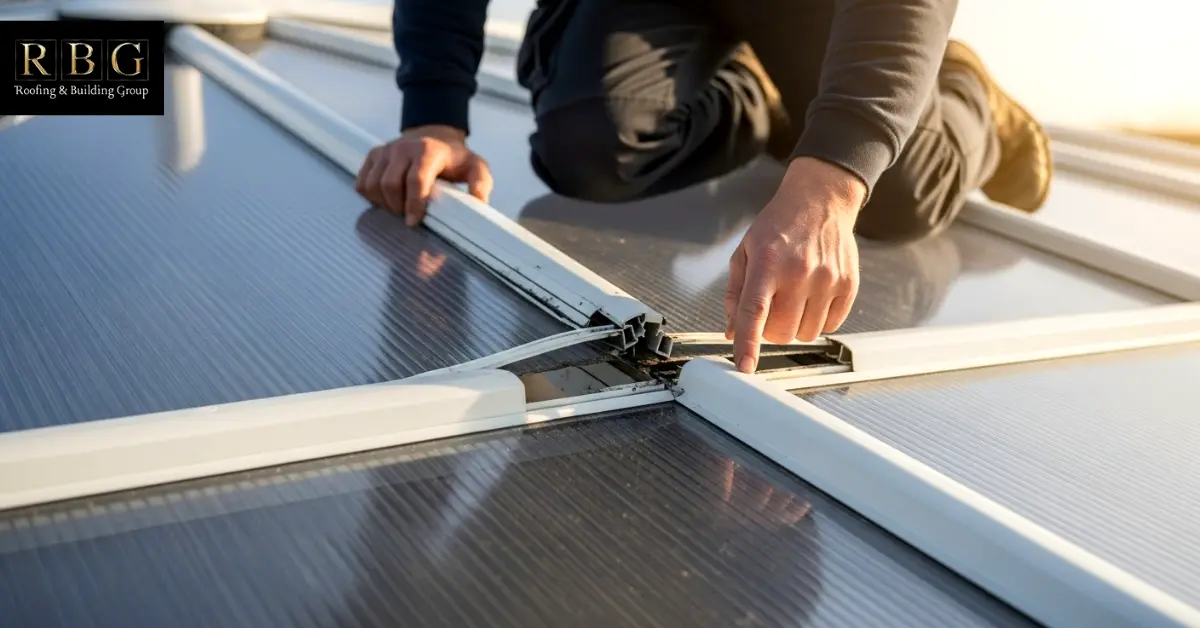
Start by identifying the source of the leak. The first step is to inspect the polycarbonate roof panels for gaps or signs of movement. If a panel has slipped or cracked, it will create an opening that allows water to enter. In this case, you’ll need to remove the damaged panel. You can do this by gently lifting off the aluminium trims that hold the panels in place.
Step 2: Remove the Damaged Panel
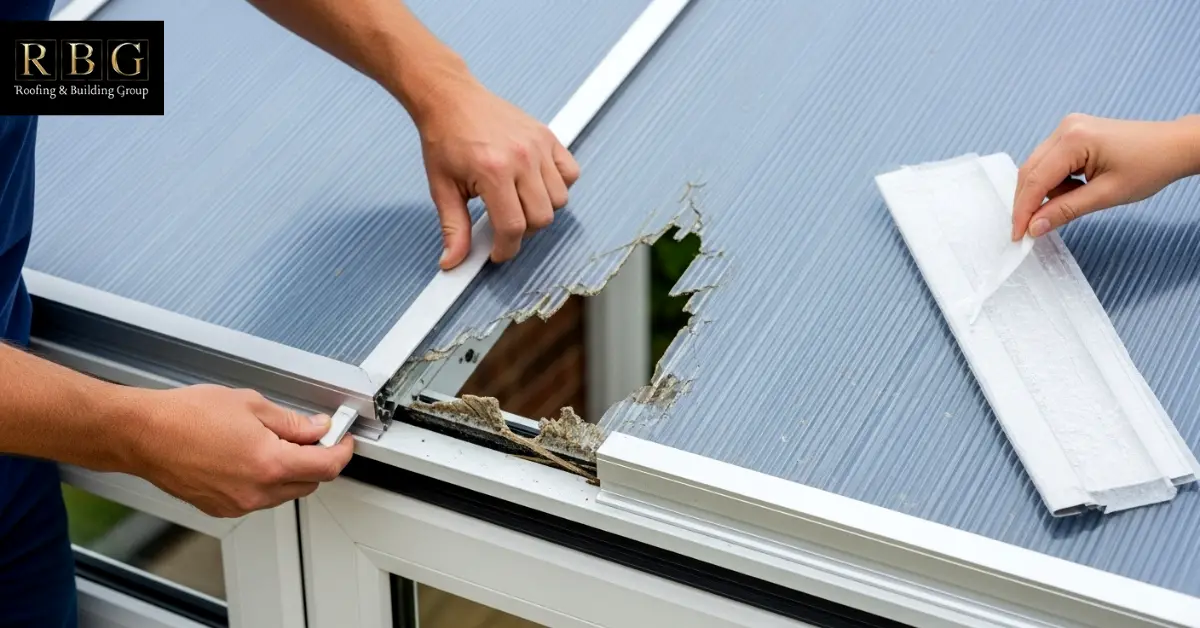
Once you’ve located the problem panel, carefully remove the aluminium trims that secure it. This step is easy to perform, as the trims are designed to clip in and can be lifted without much effort. After removing the trims, remove the panel, dry it off, and set it aside.
Step 3: Apply Silicone Sealant
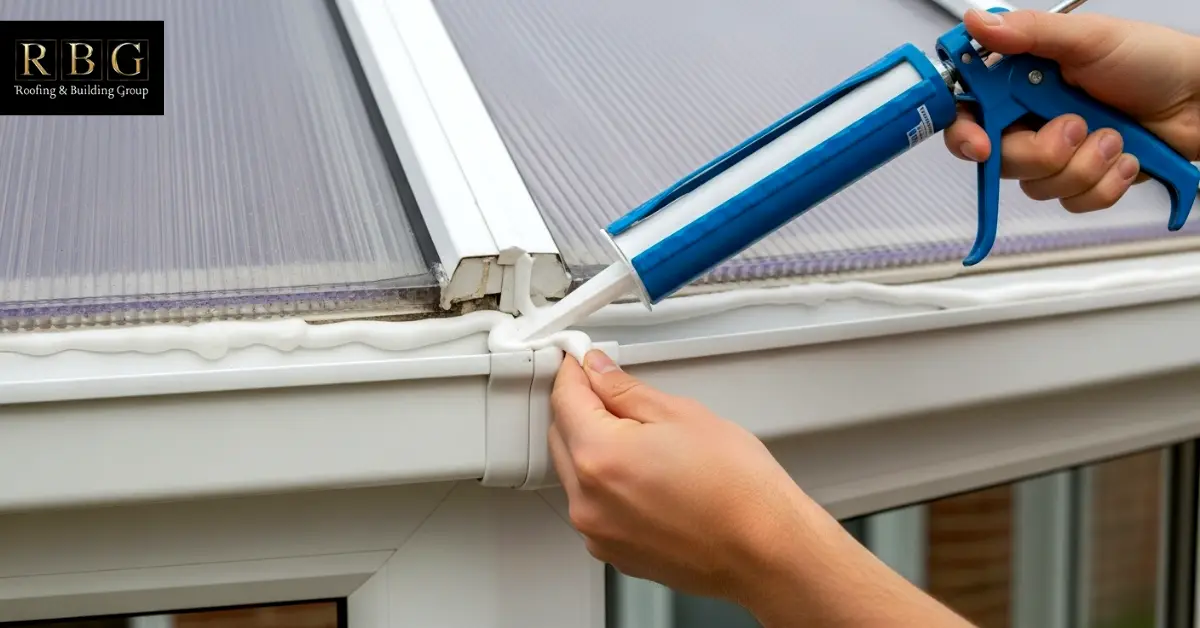
Next, apply silicone sealant along the upper trim where the panel typically sits. Ensure an even bead of silicone is used to prevent water from entering when the panel is replaced. Additionally, apply a few inches of silicone on the lower trim to keep the panel in place, especially during strong winds.
Step 4: Reinstall the Panel
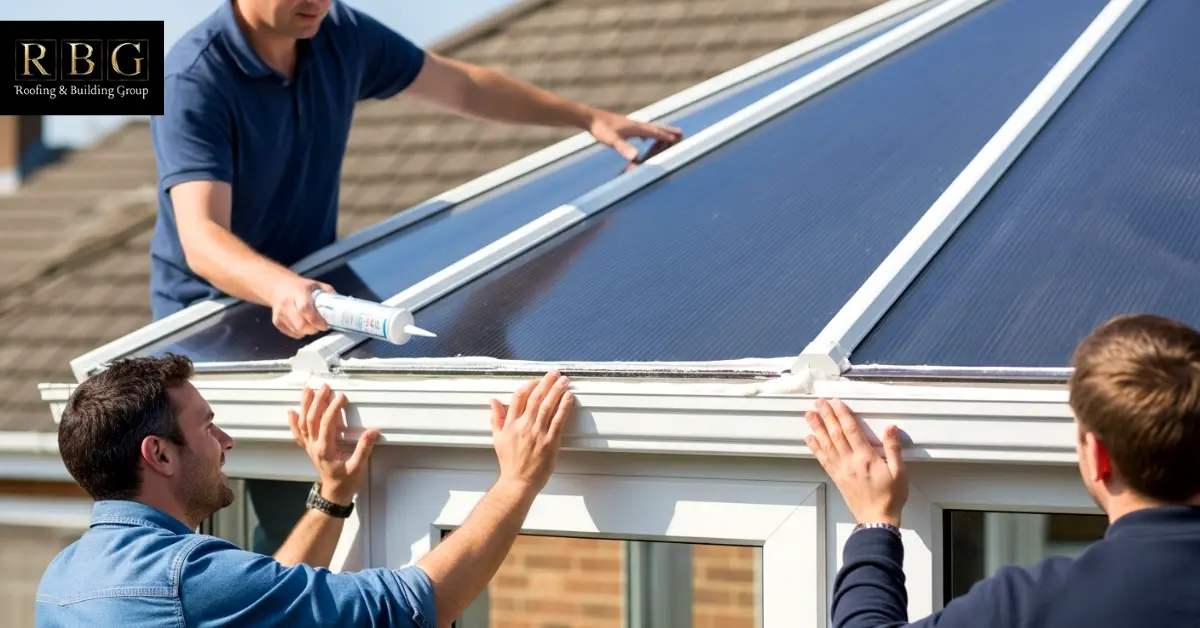
Once the silicone is applied, carefully reposition the panel. Ensure that you do not disturb the silicone as you reposition the panel. If you’re working with larger panels, it’s a good idea to have someone assist you to ensure the process goes smoothly.
Step 5: Replace the Trims
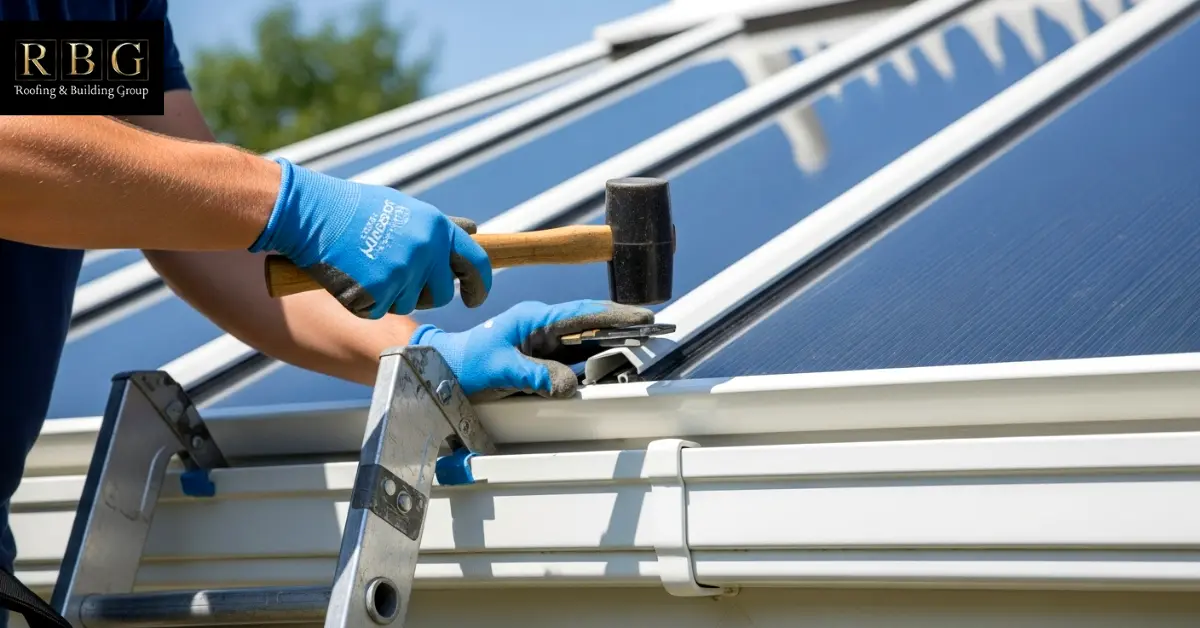
Once the panel is securely in place, press the aluminium trims back onto the roof. You can gently tap them in with a rubber mallet to ensure they are securely fastened. Avoid stepping directly on the panels to prevent cracks from forming.
Step 6: Seal the Top Edge
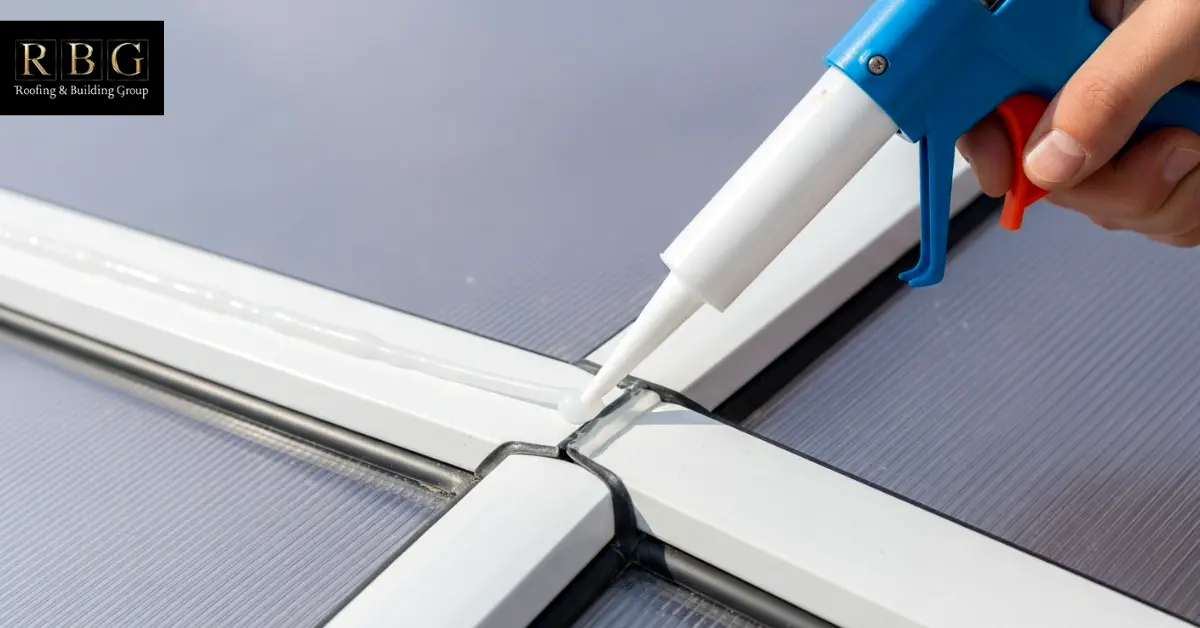
Finally, apply another bead of silicone along the top edge of the panel, where it meets the trim. This will provide extra protection against water penetration.
Additional Tips
- Inspect Gutters and Downpipes: Blocked gutters are another common cause of leaks. Ensure your gutters are free of debris to allow water to flow freely. Installing gutter guards can help prevent future blockages. If any of the gutter joints are leaking, you should fix the leaking gutter joint as soon as possible.
- Check Roof Vents: If your roof has vents, inspect them for signs of wear and tear. Worn vents can let water leak through, so resealing or replacing them may be necessary.
- Flashing Inspection: If the leak is where the conservatory joins the house, inspect the flashing. Ensure it’s properly sealed and intact. If damaged, replace it to prevent further water ingress.
By following these steps, you can effectively fix a leaking conservatory roof. Always check the weather before doing any repairs. If you’re unsure or uncomfortable performing the roof repair yourself, it’s always best to find local roofers who provide professional roofing services.
Tips for Preventing Future Leaks
- Regular Maintenance: Inspect your roof regularly for cracks, gaps, or signs of wear to catch problems early and avoid costly repairs.
- Use High-Quality Sealant: Apply weather-resistant sealant to joints and roof panels to ensure a watertight seal.
- Choose Durable Roofing Materials: Opt for durable materials like glass or polycarbonate to withstand harsh weather conditions and reduce leak risks.
Conclusion
Your conservatory is an essential part of your home, adding both value and extra living space. However, issues like a leaking roof can become a hassle, so it’s crucial to address them quickly to avoid further damage.
Now that you know how to fix a leaking conservatory roof, you’re prepared to tackle the problem efficiently. Regular maintenance and care will help keep your conservatory in excellent condition for years to come.
FAQ’s
Can I repair my conservatory roof myself?
Yes, you can repair a minor leak in a conservatory roof yourself. You’ll need basic tools, such as a silicone gun, sealant, and a step ladder. However, for complex issues, professional help may be required.
How much does it cost to fix a leaking conservatory roof?
The cost to fix a leaking conservatory roof varies depending on the severity of the damage. On average, repairs can range from £100 to £500, with more extensive issues, like panel replacements, costing more.
What is the average lifespan of a conservatory roof?
The lifespan of a conservatory roof typically ranges between 20 and 30 years. However, this depends on the material used and the level of maintenance. Polycarbonate roofs may last around 20 years, while glass roofs can last longer with proper care.
What are the tools used for fixing a conservatory roof?
Standard tools for fixing a conservatory roof include a silicone gun, silicone or conservatory roof sealant, a step ladder, and sometimes a rubber mallet. For more complex repairs, additional tools may be required, like panel lifters.
What is the best waterproof sealant for a conservatory roof?
A high-quality, weatherproof silicone sealant is ideal for conservatory roofs. Look for products specifically designed for outdoor use, such as polycarbonate roof sealants or construction-grade silicones that can withstand temperature changes and water exposure.
