
Many people clean inside their homes often, but forget the outside. The front of your house is the first thing others see, and dirty roofline boards can spoil the look. This is why knowing how to clean uPVC soffits and fascias matters for any homeowner. Soffits and fascias protect the edge of your roof and help keep rain and damp out. When they get covered in dirt, algae, or mould, problems can go unnoticed. Regular fascia and soffit cleaning keeps your roofline looking neat and working as it should.
Cleaning also helps you spot early signs of damage, cracks, or blocked gutters. It removes green stains and mould that can build up over time. With proper soffit cleaning and fascia cleaning, you can avoid bigger issues later. As experienced roofing contractors, we guide you step by step on how to clean uPVC soffits and fascias, and how to keep them clean for longer. The methods are simple, effective, and suitable for uPVC boards on most homes.
What You Need to Clean uPVC Soffits and Fascias
Cleaning uPVC soffits and fascias is simple with the right tools. The equipment you need depends on whether you want to use a pressure washer or clean manually.
If using a pressure washer:
- Pressure washer
- Mild detergent or washing liquid
If cleaning by hand:
- Bucket of water
- Sponge or soft cloth
- Mild detergent or washing liquid
- A ladder to reach high areas
- Garden hose for rinsing
Using the correct tools makes fascia and soffit cleaning easier and safer. Always make sure your ladder is stable, and you have someone to help if needed. Proper soffit cleaning and the right equipment help remove dirt, mould, and green stains effectively.
Step-by-Step Guide to Cleaning uPVC Soffits and Fascias
Step 1: Rinse Off Loose Dirt
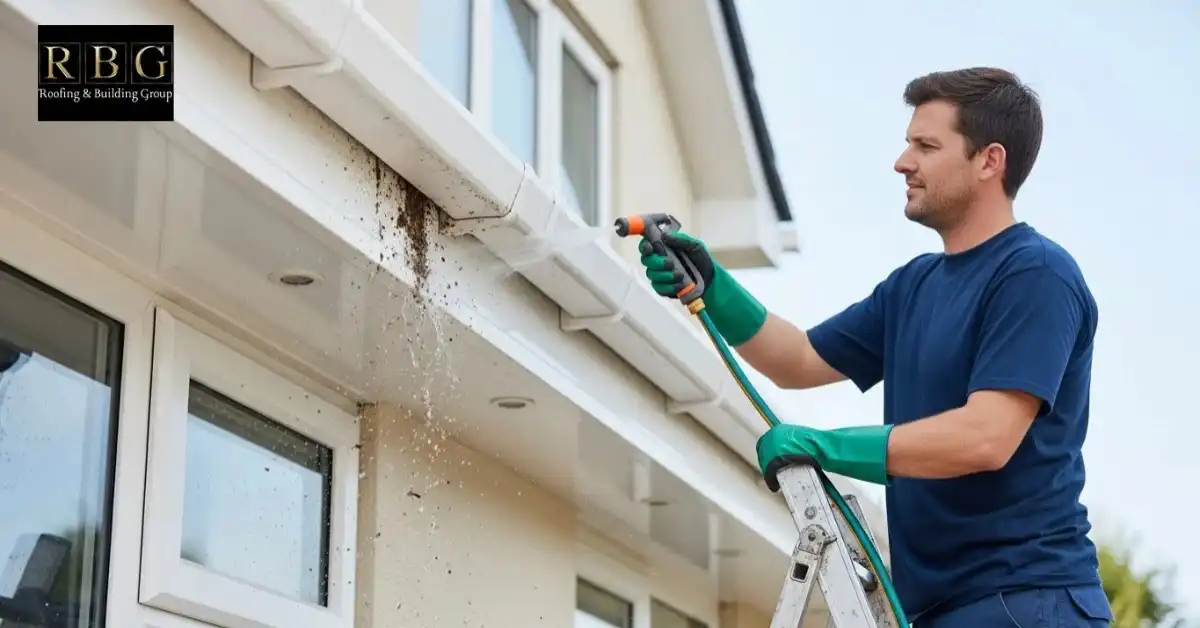
Before you start rinsing your soffits and fascias, check that the fascia and soffits are fitted securely to avoid any damage during cleaning. Start by removing any loose dirt and debris from your soffits and fascias. If you have a pressure washer, use a low-pressure setting to rinse the surface gently. Without a pressure washer, a garden hose or a damp sponge works fine. This step helps prevent dirt from scratching the uPVC when you scrub later.
Step 2: Apply a Mild Cleaning Solution

Next, prepare a cleaning solution. Mix a mild detergent with warm water in a bucket. For stubborn stains or green mould, you can add a few tablespoons of bleach. Use a sponge or soft brush to apply the solution evenly across your soffits and fascias. Make sure every part is covered before scrubbing.
Step 3: Gently Scrub the Surface
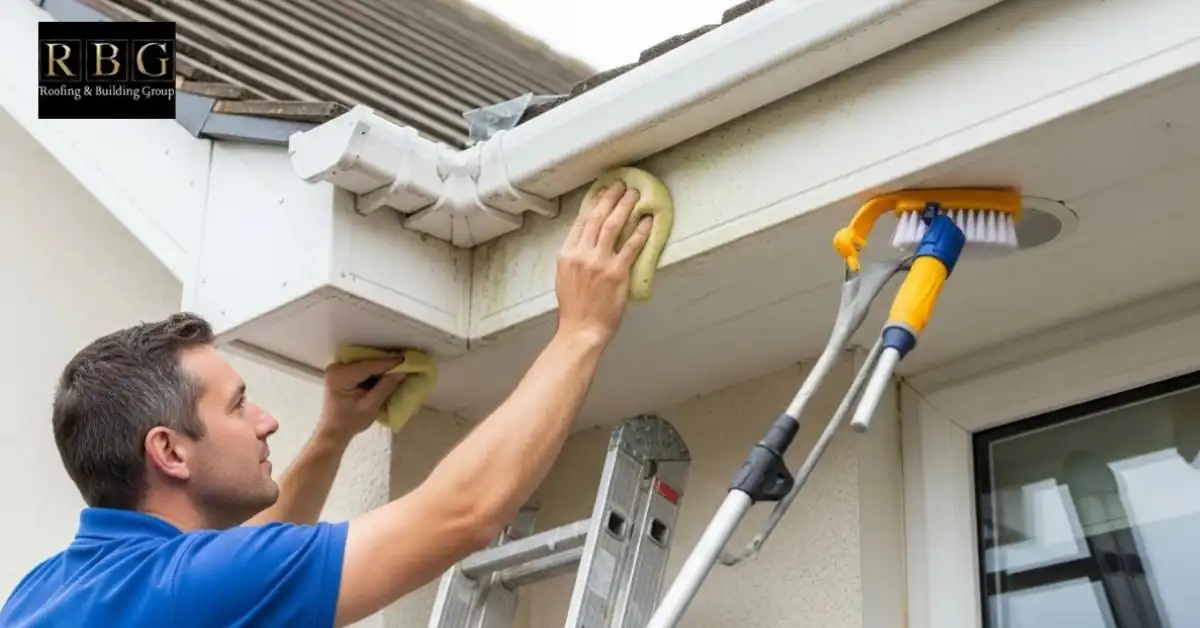
Using a soft brush or sponge, scrub your soffits and fascias carefully. Focus on areas that collect more dirt or show signs of mould. Always work from a stable ladder and avoid leaning too far. For deeper cleaning, a fascia cleaning brush works well to reach grooves and corners.
Step 4: Rinse and Wipe Clean
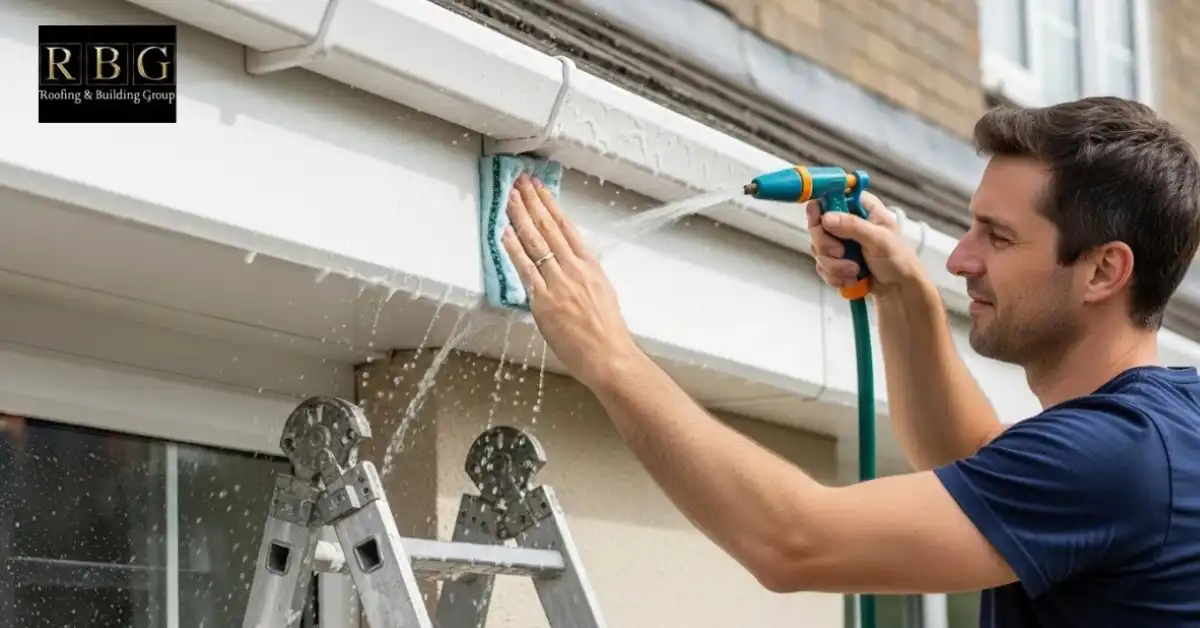
Finally, rinse away all detergent and dirt. If using a pressure washer, switch to low pressure for the final rinse. If cleaning by hand, use a garden hose or a clean sponge with water. Wipe down the surface to leave your soffits and fascias sparkling clean.
Regular cleaning with the right tools and methods not only keeps your home looking neat but also protects your fascia boards and soffits from long-term damage. If you are unsure or uncomfortable doing it yourself, consider hiring professional uPVC fascia and soffit cleaning services.
Tips to Keep uPVC Soffits and Fascias Clean for Longer
- Clean your soffits and fascias at least twice a year to prevent dirt, mould, and algae build-up.
- Do minor touch-ups more often to make fascia and soffit cleaning easier and faster.
- Trim back nearby trees and plants to reduce leaves, moss, and debris on your roofline. This also helps with gutter and fascia cleaning.
- Use a soft brush or sponge for minor stains and avoid harsh chemicals that can damage uPVC.
- Keep a bucket of warm water and mild detergent ready for quick cleaning.
- Check your soffits and fascias after heavy rain or storms to spot dirt or mould early, and clean them before it becomes difficult to do so.
Conclusion
Keeping your uPVC soffits and fascias clean is essential for both the look and health of your home. Regular fascia and soffit cleaning prevents dirt, mould, and algae from building up, protecting your roofline and fascia boards. Using the right tools, whether a pressure washer or a simple bucket and sponge, makes the job easier and safer. Following our step-by-step guide ensures your soffits and fascias stay in top condition. With a bit of care and regular maintenance, you can save time, avoid damage, and keep your home looking well-maintained. Simple soffit, gutter, and fascia cleaning routines will keep your property looking its best year-round.
FAQ’s
What Not to Use on uPVC Soffits and Fascias?
Avoid abrasive cleaners, harsh chemicals, or wire brushes, as these can scratch or damage uPVC surfaces. Stick to mild detergents, warm water, or a fascia-cleaning brush for safe, effective fascia and soffit cleaning.
How Often Should uPVC Soffits and Fascias Be Cleaned?
It’s best to clean your soffits and fascias at least twice a year. Homes in damp or leafy areas may need more frequent cleaning to prevent the build-up of algae, mould, and dirt. Regular soffit cleaning protects your roofline and keeps boards looking neat.
Why Cleaning uPVC Soffits and Fascias Is Important?
Cleaning removes dirt, green stains, and mould that can cause long-term damage. Regular fascia and soffit cleaning ensures your roofline remains protected, prolongs the life of your uPVC boards, and helps you spot early signs of wear or leaks.
How to Remove Mould and Green Stains From uPVC Soffits and Fascias?
Mix a mild detergent with warm water, or use a small amount of bleach for stubborn patches. Gently scrub with a soft brush, rinse thoroughly, and repeat if needed. Proper soffit and fascia cleaning prevents mould from returning and keeps boards clean.
